The best furnace for a Temecula, CA home isn't the one with the biggest brand name on the cabinet. It's the unit sized correctly for your house, installed to code, and matched to a climate where the furnace sits idle for most of the year and then has to work flawlessly on the first cold night. This guide breaks down furnace types, real 2026 installed pricing, the permit and inspection steps a legitimate install actually requires, and when a repair stops making financial sense.
Which Furnace Type Is Actually Best for a Temecula Home?
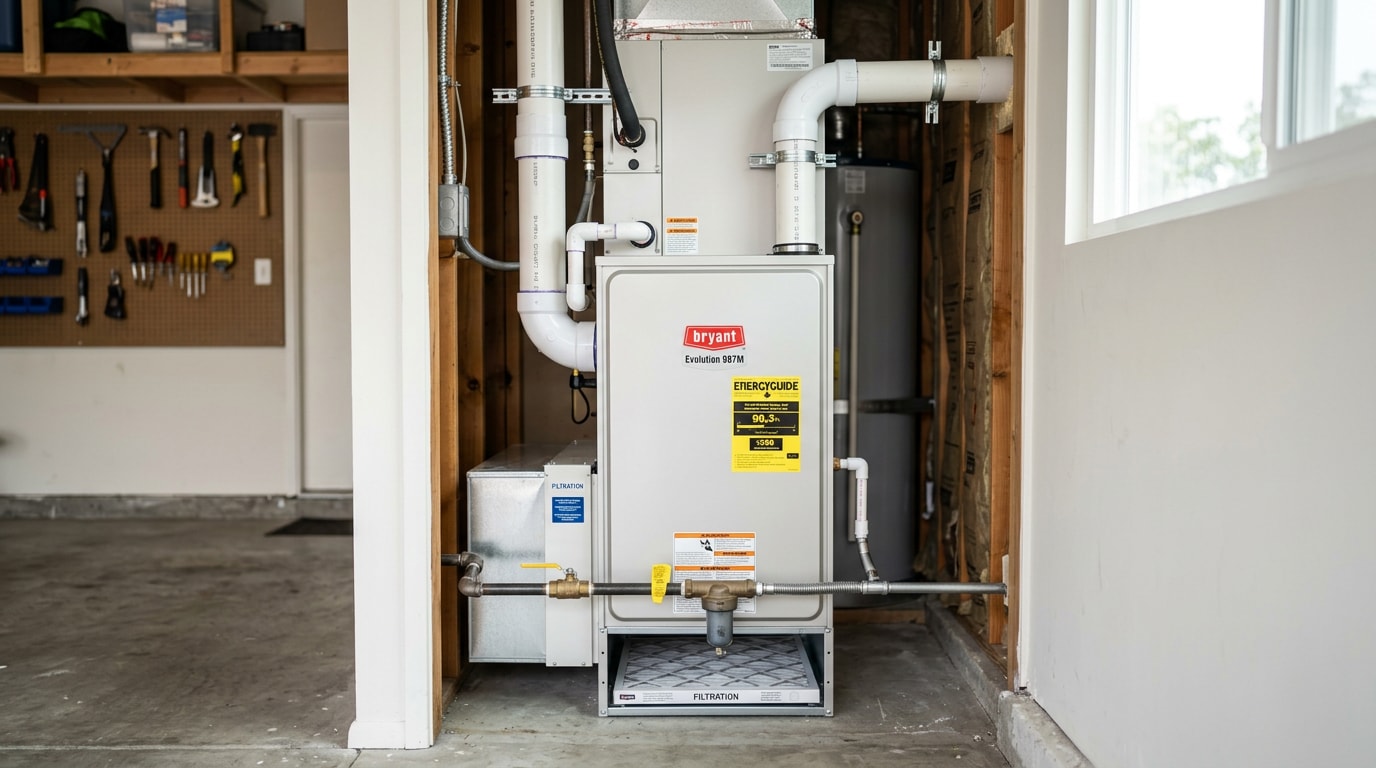
Most Temecula homes run on natural gas furnaces because gas is cheaper to operate than electric resistance heat, even with mild winters. Electric furnaces cost less upfront and skip the gas line entirely, which matters for homes without existing gas service, but they cost more every month the system runs.
Staging matters as much as fuel type. A single-stage furnace fires at full output every time it kicks on, which is loud and tends to leave some rooms warmer than others. A two-stage or modulating furnace ramps output up and down to match demand, holding a steadier temperature with less noise. For most Temecula homes, a two-stage gas furnace hits the balance of upfront cost and comfort that homeowners actually notice.
| Furnace Type | Typical AFUE | Best Fit | 2026 Installed Cost Range |
|---|---|---|---|
| Single-stage gas | 80% | Budget replacements, smaller homes | $3,800 to $5,500 |
| Two-stage gas | 90% to 92% | Most Temecula single-family homes | $5,200 to $7,800 |
| Modulating gas | 96% to 98% | Larger or multi-story homes, uneven heating | $7,500 to $11,000+ |
| Electric furnace | N/A (uses HSPF/COP) | No gas line, small well-insulated homes | $3,500 to $6,500 |
AFUE (Annual Fuel Utilization Efficiency) is the percentage of fuel that actually becomes heat instead of escaping up the flue. An 80% AFUE furnace turns 80 cents of every fuel dollar into heat for the house; a 96% unit turns nearly all of it into heat. The U.S. Department of Energy tracks current minimum efficiency standards and publishes lifetime savings comparisons for residential furnace models by efficiency tier , which is worth a look before you assume the cheapest furnace is actually the cheapest option over 15 to 20 years of operation.
Furnace Installation Cost in Temecula (2026 Pricing Breakdown)
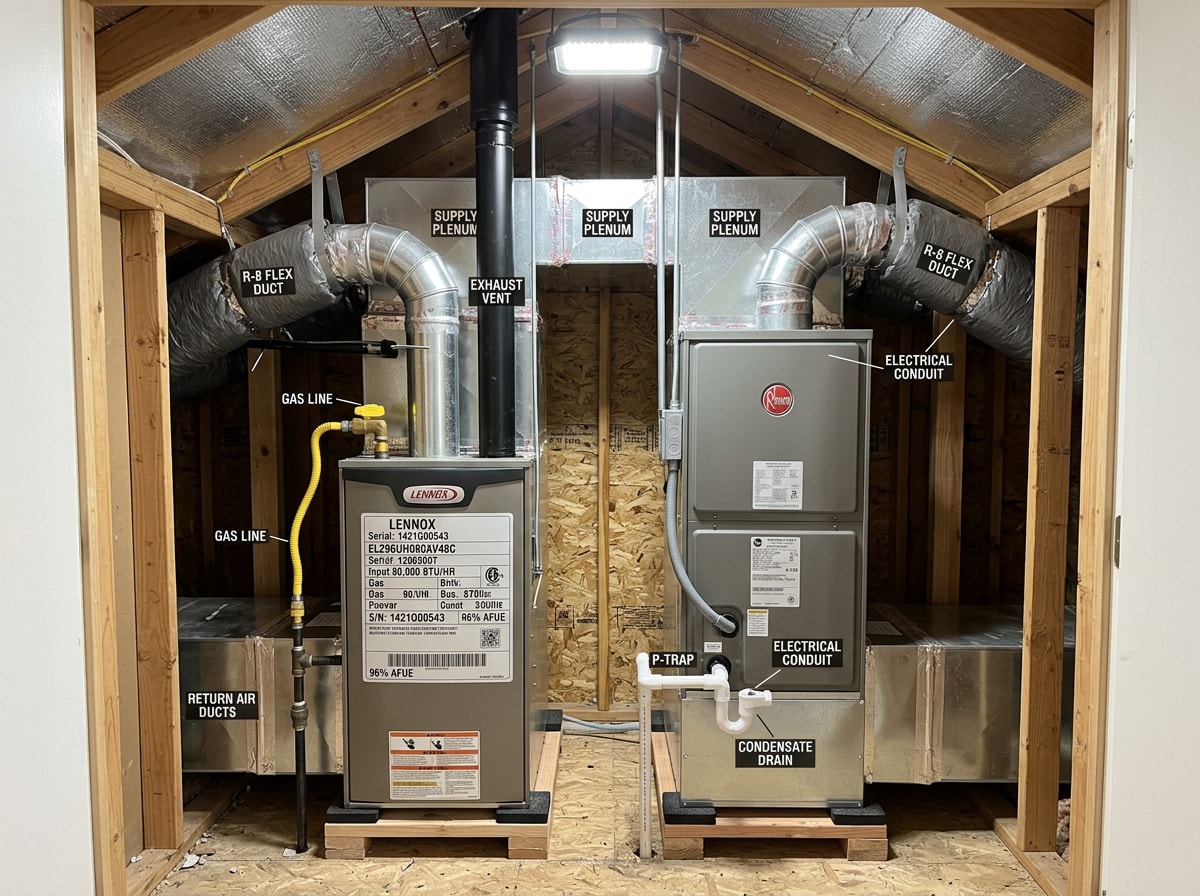
Installed cost depends on more than the equipment. Ductwork condition, existing gas line capacity, electrical panel availability, and attic or closet access all move the number up or down from the ranges in the table above.
A few things that typically add cost on top of the base install:
- Ductwork repair or replacement if the existing system is leaking or undersized
- Electrical panel upgrades for higher-efficiency furnaces with variable-speed blowers
- Difficult attic or crawlspace access that adds labor hours
- Removal and disposal of the old furnace and any asbestos-era ductwork
These are planning ranges, not a quote. A written, itemized estimate before work starts is the only number that actually matters, and a licensed HVAC contractor should walk you through every line item in it. You can get a free estimate before deciding between a straight swap and a higher-efficiency upgrade.
The Furnace Installation Process, Step by Step
A proper furnace installation runs through four phases: assessment, permitting, physical install, and start-up testing. Skipping any one of them is how warranties get voided and safety gets compromised.
Pre-Install Site Assessment and Permits
Before anything gets installed, a technician performs a Manual J load calculation to size the unit correctly, checks gas line and electrical capacity, and confirms code clearances and condensate drainage. Undersized ductwork or an outdated gas line gets flagged here, not after the new furnace is already bolted in.
Furnace replacement also requires a mechanical permit, something many homeowners don't expect for what feels like a simple swap. Depending on the address, that permit comes from the city of Temecula or from Riverside County for unincorporated areas nearby, and the Riverside County Department of Building and Safety handles plan review and inspections for projects outside city limits. California's Title 24 energy code also requires a CF-1R compliance certificate filed alongside the permit for any furnace change-out. A reputable heating installation team handles this paperwork directly instead of leaving it to the homeowner.
Start-Up and Combustion Safety Testing
Start-up testing is a short, mechanical verification: clean ignition, correct gas pressure, and safe combustion venting, confirmed before the technician leaves the system running. It typically takes 20 to 30 minutes and should never be skipped, even on a straightforward like-for-like replacement.
This includes a heat exchanger inspection and flue draft check. A cracked heat exchanger or blocked flue can let carbon monoxide into the home, and the CDC reports that at least 420 people die and more than 100,000 people visit the emergency department from accidental CO poisoning every year in the United States . That single safety check is the reason a furnace install should never be treated as a weekend DIY swap.
Furnace Repair vs. Replacement: When a Repair Stops Making Sense
Not every heating problem means it's time for a new furnace. Most furnace repair calls land between $150 and $900, and the real question is knowing what each common failure costs before deciding whether another repair still makes sense.
| Common Failure | Typical Repair Cost | Repair or Replace? |
|---|---|---|
| Dirty flame sensor | $100 to $250 | Repair |
| Faulty hot surface igniter | $150 to $350 | Repair |
| Failed capacitor | $150 to $400 | Repair |
| Tripped limit switch | $150 to $300 | Repair |
| Blower motor replacement | $450 to $900+ | Compare against age |
| Cracked heat exchanger | Often not cost-effective to repair | Usually replace |
A furnace needing three or four of these repairs within a year or two is usually signaling it's time to compare replacement costs instead of writing another repair check. If the unit is also past 15 years old, the math tips toward replacement even faster, since furnace replacement resets the clock on both reliability and efficiency.
Permits: A Repair Doesn't Need One, a Replacement Does
A straightforward repair, swapping an igniter or sensor, needs no permit. A full furnace change-out does, because Riverside County and its cities require a mechanical permit for any change-out, with the city issuing it inside Temecula limits and the county issuing it in unincorporated areas nearby. Skipping that step on a replacement isn't a shortcut, it's a liability if the system is ever inspected during a home sale.
Why Temecula's Mild Winters Change the Replacement Math
Temecula's winters rarely demand sustained furnace runtime the way colder climates do, and that creates a failure pattern we see every October on service calls across the valley: furnaces that sat idle since March come on for the first cold snap and immediately show oxidized flame sensors, seized condensate pumps, or a filter nobody changed since spring. These are dormancy-driven failures, not wear failures, and they make up the bulk of first-cold-night calls in the Temecula and Murrieta area.
This also changes how homeowners should think about the "upgrade to save on energy bills" pitch. That argument assumes a furnace running steadily all winter long. In Temecula, a furnace might only log a few hundred hours of runtime across the whole season, which means the payback period on a high-efficiency upgrade stretches out much further than it would in Minnesota or Chicago. Age, repair frequency, and safety findings from an inspection are better reasons to replace a Temecula furnace than projected utility savings alone.
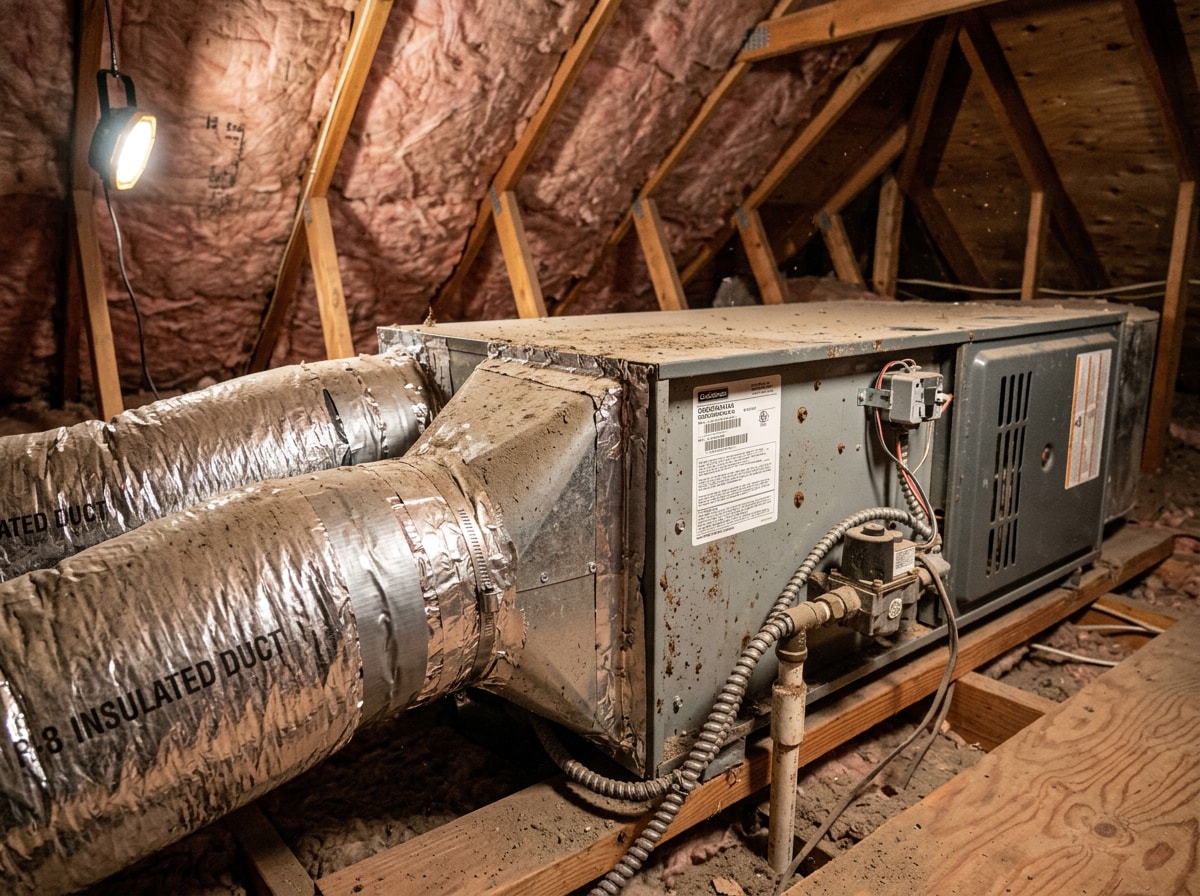
Homeowners anywhere in the broader Temecula service area tend to see this same pattern, regardless of neighborhood or home age, and routine heating maintenance before the first cold week catches most of these failures before they turn into a no-heat emergency.
Financing a New Furnace in Temecula
A new furnace is a real investment, and most reputable Temecula contractors offer financing for qualifying customers with manageable monthly payments. If a $7,000 to $11,000 modulating system feels out of reach upfront, spreading the cost over a payment plan often keeps the monthly number close to what a bad energy-bill spike would run anyway. Contact us to ask about current financing options before assuming a higher-efficiency furnace is out of budget, or browse Priority One Heating & Air for the full list of heating and cooling services we run across Riverside County. If you're weighing a combined heating and cooling upgrade rather than a furnace-only swap, our air conditioner installation guide for Temecula covers how the two decisions usually get bundled into one project.
FAQ
How much does furnace installation cost in Temecula?
Cost depends on system type, home size, efficiency rating, ductwork condition, and whether gas or electrical upgrades are needed. Expect $3,800 to $11,000+ installed depending on AFUE tier. A written estimate should be provided before work begins, and financing is typically available for qualifying homeowners.
What size furnace do I need?
Furnace sizing depends on your home's square footage, insulation quality, and layout, calculated with a Manual J load calculation during an in-home visit, not estimated over the phone. BTU needs vary significantly between similarly sized homes depending on insulation and window exposure.
Should I repair or replace my furnace?
If the furnace is older than 15 years or needs frequent repairs, replacement is usually more cost-effective long-term. A newer furnace with one minor fault almost always makes repair the smarter near-term spend. ENERGY STAR's own guidance is that once a furnace or boiler is more than 15 years old, it's worth considering a replacement with an ENERGY STAR qualified model .
Do I need a permit to repair my furnace?
No, a repair needs no permit. Replacing the furnace does, since Riverside County and its cities require a mechanical permit for a change-out, with the city issuing it inside Temecula limits and the county issuing it in unincorporated areas.
How long do furnaces last?
Furnace lifespan nationally runs 15 to 20 years. In Temecula's mild winters, furnaces log fewer running hours per year than in colder regions, which can support a longer practical lifespan than the national average, though frequent repairs and rising energy bills are still signs your equipment is becoming less efficient regardless of how many hours it's logged.