Commercial HVAC installation companies in Temecula, CA aren't all built for the same job. A contractor who's great at swapping out a home furnace may not know how to size a rooftop package unit for a 12,000-square-foot retail space or navigate the permitting a business build-out requires. This guide breaks down what separates a qualified commercial installer from a residential generalist, what the installation process actually looks like, and what to check before you sign a contract.
Reviewed by the licensed technicians at Priority One Heating & Air, a C-20 licensed commercial and residential HVAC contractor serving Temecula and the greater Riverside County area. Questions about a project? Contact our team directly.
Visit Priority One, Inc. to see our services and request a free estimate.
What Is Commercial HVAC?
Commercial HVAC refers to the heating, cooling, and ventilation equipment designed to serve business properties rather than single-family homes. These systems handle larger square footage, higher occupancy loads, and stricter code requirements than typical residential setups.
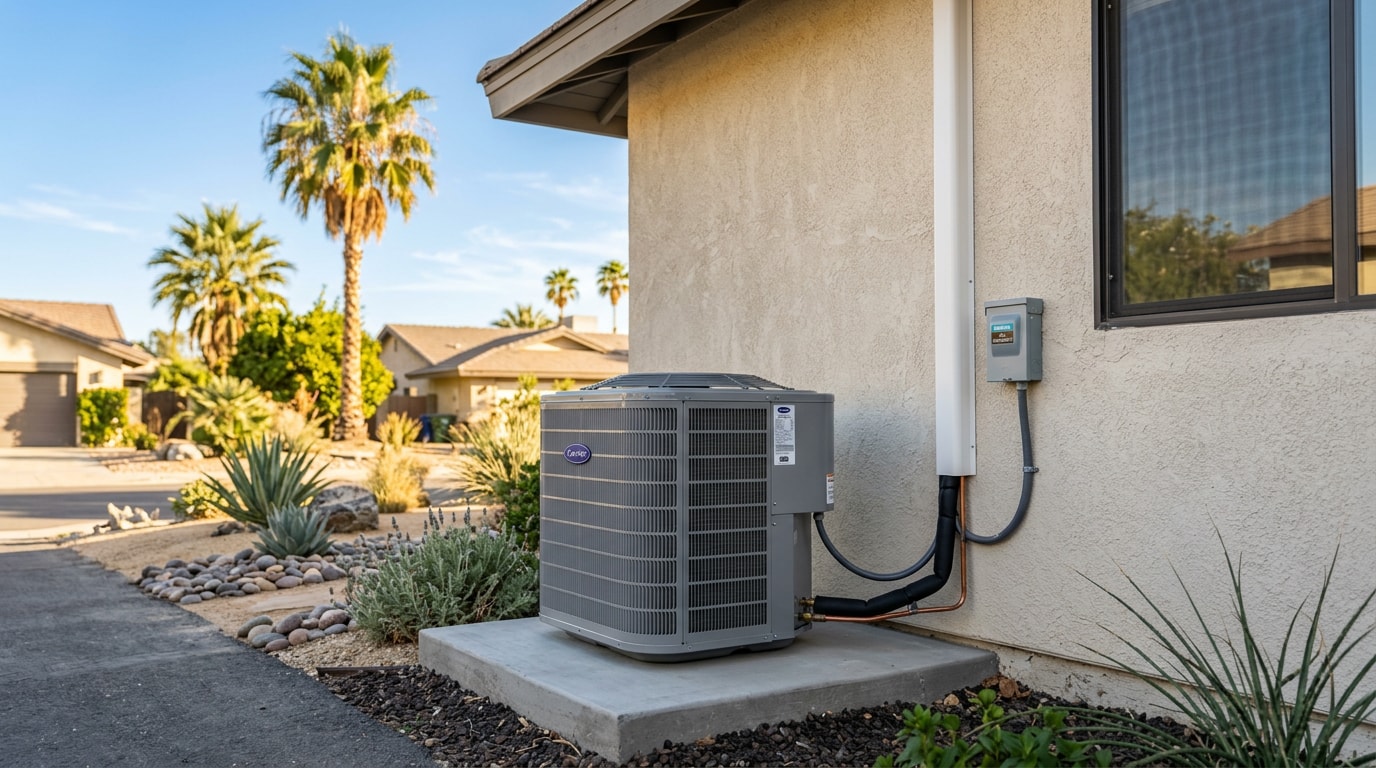
Where a home might run on one central unit, commercial heating and cooling often relies on multiple zones, rooftop equipment, and ductwork sized for continuous business use. Commercial HVAC systems in Temecula also face inspection and permitting rules that residential installs rarely encounter, which shapes how installation projects get planned and executed.
How to Choose Among Commercial HVAC Installation Companies in Temecula, CA
Not every licensed contractor is set up to handle commercial-scale work. Before you request a quote, check for these markers of a company that actually specializes in commercial installations:
- C-20 licensing and commercial insurance. California requires a C-20 warm-air heating, ventilating, and air-conditioning license for this work, and commercial jobs typically carry higher liability coverage requirements than residential ones.
- A documented load calculation process. Ask how they size equipment. If the answer is "we match what's already there," that's a red flag for an oversized or undersized replacement.
- Permitting experience with your city. Temecula, Murrieta, and the rest of Riverside County each have their own plan-check turnaround times and inspection quirks.
- References from similar buildings. A contractor who's installed systems in restaurants isn't automatically qualified for a medical office or a warehouse.
- A written scope covering commissioning. Startup testing of airflow, controls, and refrigerant charge should be spelled out, not left as an afterthought.
- A maintenance plan offered alongside installation. Companies that stand behind their own installs usually want to keep servicing the equipment.
Reviewing a contractor's HVAC contractor services and asking how they handle each of these points before you sign is a faster filter than reading reviews alone.
Commercial HVAC Installation Process
Commercial HVAC installation covers two very different scenarios: new construction builds and equipment change-outs on aging systems. Both require the same general sequence.
- Load calculation. Technicians measure square footage, insulation, occupancy, and equipment heat output to size the system correctly.
- Equipment selection. Capacity and efficiency ratings get matched to the building's actual demand rather than a guess based on the old unit.
- Permitting. Most Temecula commercial projects require city plan-check and sign-off before work begins.
- Commissioning. Airflow, controls, and refrigerant charge are tested to confirm the system performs as designed.
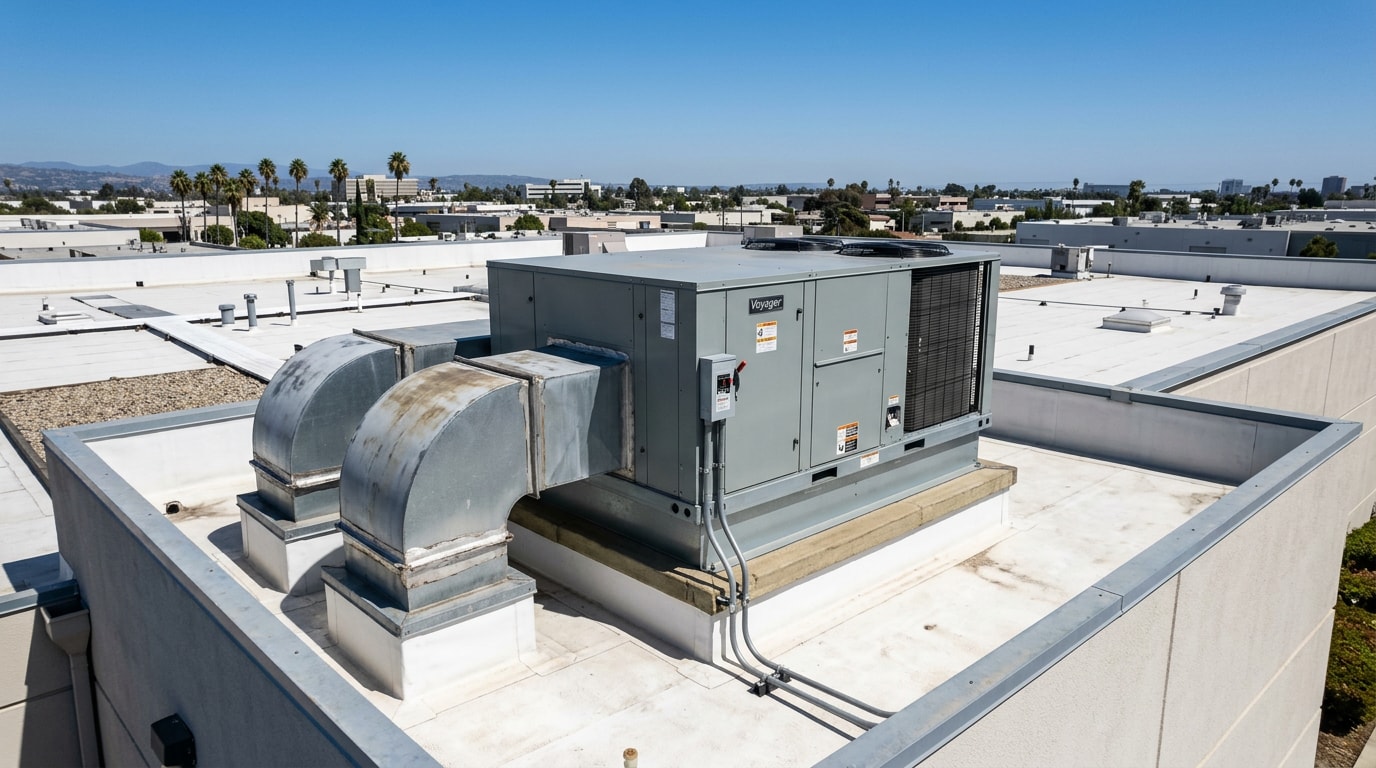
On rooftop package unit change-outs for occupied retail buildings, timing matters as much as the equipment itself. Crews often schedule crane lifts and duct tie-ins before business hours so a tenant doesn't lose a day of sales during the swap.
Federal efficiency rules also shape what can legally go in today. The Department of Energy periodically tightens minimum efficiency standards for commercial package air conditioners and heat pumps, most recently amending them for equipment classes with a rated cooling capacity greater than or equal to 65,000 Btu/h in a May 2024 rule . On top of federal rules, California's own building energy code adds another layer: the 2025 Building Energy Efficiency Standards took effect on January 1, 2026, and any project whose permit application is submitted on or after that date must comply with the new cycle . Confirming which cycle applies to your permit is worth doing with your contractor before equipment gets ordered.
Commercial HVAC Services We Offer
A capable Temecula commercial contractor should offer more than a single service. Installation, cooling, ventilation, and custom fabrication work together to keep a building comfortable and compliant.
Commercial Air Conditioning
Commercial air conditioning covers repair, maintenance, and installation across several equipment types. Rooftop package units remain the most common choice for retail and office buildings because they keep noisy equipment off the sales floor and simplify roof-level servicing. Split systems are common in smaller commercial spaces where rooftop access isn't practical.
A qualified installer should be comfortable specifying either format based on the building's layout. See our air conditioning installation and air conditioning replacement pages for what each project typically involves.
Commercial Heating
Heating equipment in commercial buildings faces the same load and zoning considerations as cooling. Rooftop package units often combine heating and cooling in one cabinet, while some buildings run separate systems entirely.
A contractor should be able to speak to both heating installation and furnace-specific work without defaulting to a one-size-fits-all recommendation.
Commercial Ventilation & Duct Systems
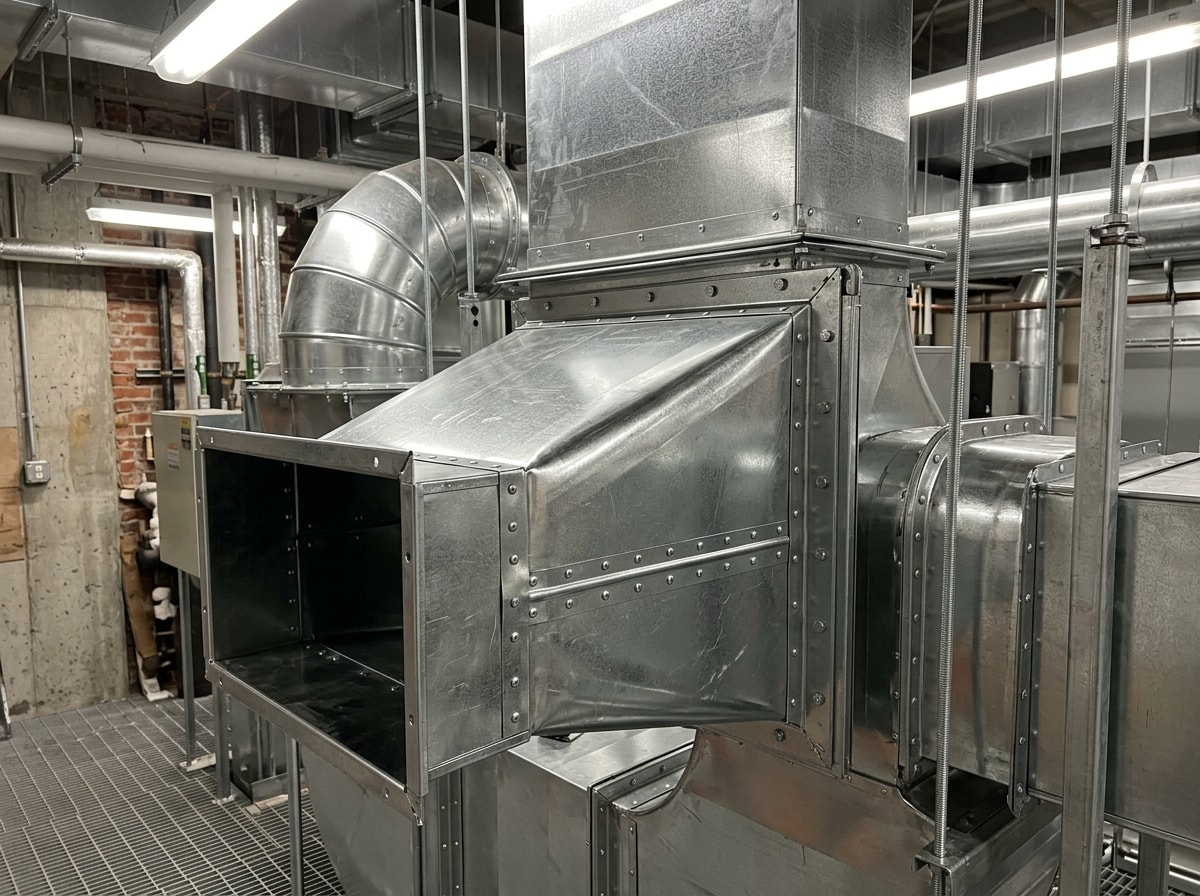
Proper ventilation and duct design keep air moving efficiently while meeting fresh-air requirements tied to occupancy type. Poorly sized ductwork is one of the more common reasons a new system underperforms even after the right equipment choice.
Duct systems also come under scrutiny during inspection, since code compliance depends on airflow, sealing, and material ratings. Our ventilation installation team handles this alongside equipment installs so airflow and duct sizing get planned together rather than as an afterthought.
Custom Sheet Metal Work
Some commercial buildings need ductwork, venting, or transitions that off-the-shelf components can't handle. Custom sheet metal fabrication lets an installer build ductwork sized precisely for irregular ceiling spaces or specialty exhaust needs, which comes up often in restaurant kitchens and older retrofit buildings.
Industries We Serve
Commercial HVAC needs vary widely by building type, and an experienced installer should have direct experience across several:
- Retail — customer comfort and predictable operating costs
- Office buildings — zoned control for varying occupancy across floors
- Restaurants — heavier ventilation demands tied to kitchen exhaust
- Warehouses — large open volumes and minimal insulation
- Schools and campuses — installation scheduled around students and staff
- Multi-tenant offices, hotels, and shopping centers
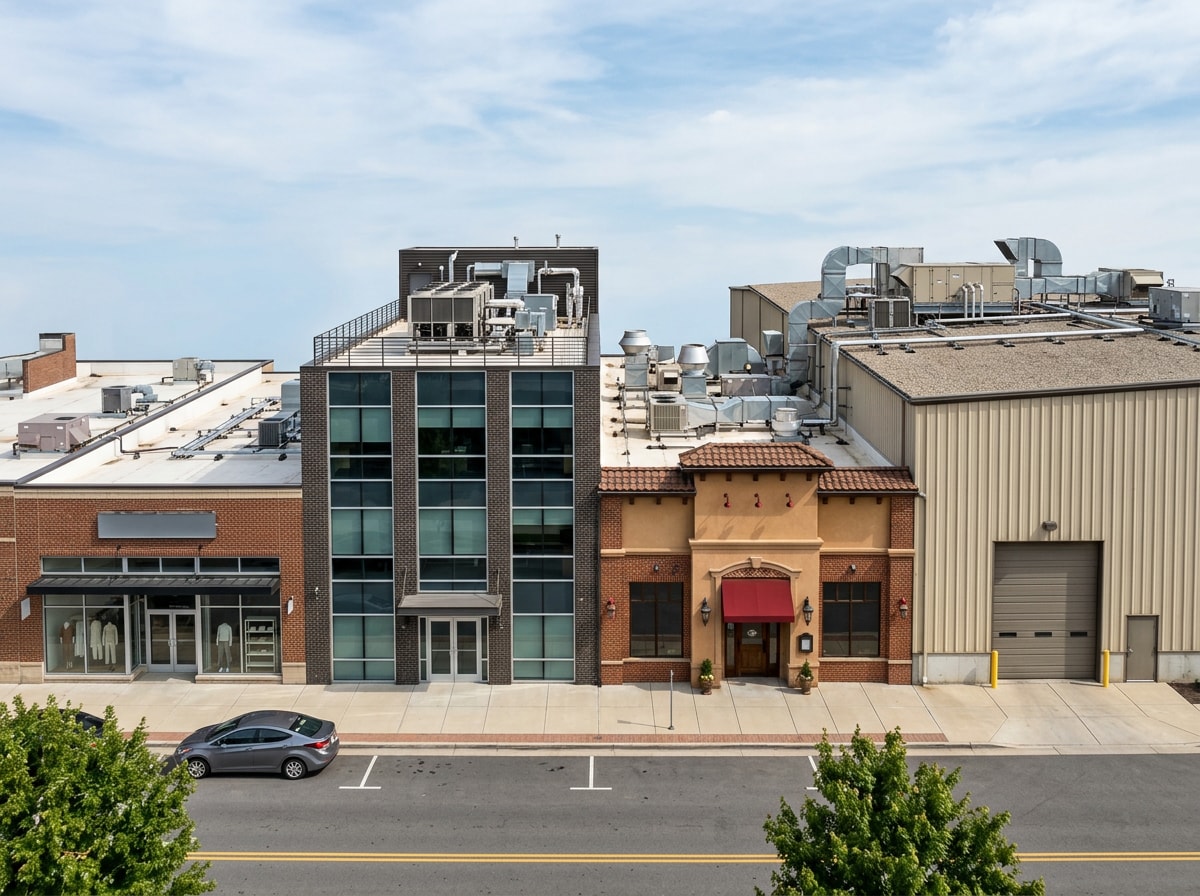
If your building falls outside these categories, ask directly whether the contractor has handled that specific facility type before, not just "commercial work" in general.
Commercial vs. Residential Installation: What's Actually Different
| Factor | Residential Install | Commercial Install |
|---|---|---|
| Typical equipment | Single split system | Rooftop package units, multi-zone systems |
| Permitting | Simpler, faster turnaround | City plan-check, often multi-step inspection |
| Load calculation | Based on home size and insulation | Based on occupancy, kitchen/exhaust loads, hours of operation |
| Downtime tolerance | Usually flexible | Often needs to happen around business hours |
| Code layer | Title 24 residential measures | Title 24 nonresidential measures plus DOE commercial equipment standards |
What You Can Expect From a Commercial HVAC Installation Company
A properly executed commercial installation should deliver balanced airflow, consistent comfort across zones, fewer breakdowns, and a code-compliant install that passes inspection on the first attempt. Energy costs typically drop once a correctly sized system replaces an oversized or aging unit.
The gap between a licensed commercial specialist and a residential-focused contractor working outside their expertise shows up fastest in the first year of operation, when sizing and zoning mistakes tend to surface as high utility bills or uneven comfort complaints. Every project should also align with California mechanical codes and Title 24 energy requirements, which are administered by the California Energy Commission and establish minimum energy performance requirements for residential and nonresidential buildings throughout the state .
Ready to get a project scoped? Get a free estimate and we'll walk your building before quoting equipment.
Commercial HVAC Maintenance Plans
Many commercial HVAC failures are preventable with routine attention rather than reactive repairs. A structured maintenance plan catches worn belts, refrigerant leaks, and airflow restrictions before they turn into full system failures.
A standard preventative maintenance plan includes scheduled tune-ups, filter changes, and coil cleaning designed to extend equipment lifespan and keep warranties intact. Facilities running heavier equipment loads, like restaurants or medical offices, sometimes benefit from more frequent visits than the standard twice-a-year schedule.
ENERGY STAR's guidance for commercial buildings recommends redefining preventive maintenance to include periodic reviews of HVAC schedules, temperature set points, and occupant use requirements so equipment only runs when it's actually needed , which is as much about controls as it is about physical upkeep.
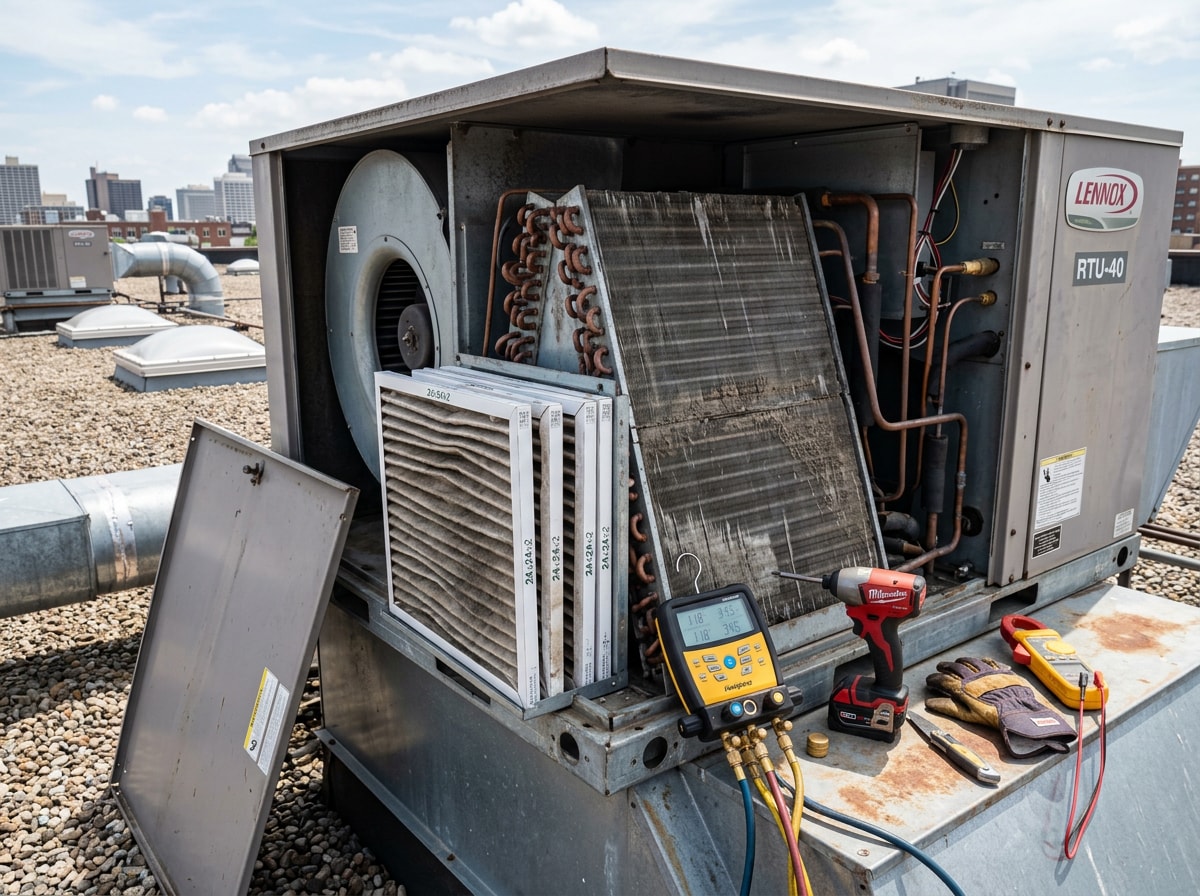
Setting up a heating maintenance plan alongside a new installation is one of the simplest ways to protect that investment long term. For buildings also dealing with humidity, dust, or IAQ complaints, our air quality services team can bundle testing and filtration into the same visit.
If you manage properties across the region, our breakdown of commercial HVAC companies near me in Riverside County covers how the same evaluation criteria apply outside Temecula proper, including in Murrieta and Corona.
FAQ
What commercial HVAC services do you provide in Temecula, CA?
Complete commercial HVAC services in Temecula typically include installation, repair, and ongoing maintenance for retail, office, restaurant, and warehouse properties. Work is tailored to each building's layout, aiming for consistent comfort, energy efficiency, and reliable year-round performance.
How often should a commercial HVAC system be serviced?
Most commercial HVAC systems should be serviced at least twice a year, typically before peak cooling and heating seasons. High-demand facilities like restaurants or medical offices sometimes need quarterly visits to keep up with heavier equipment use.
How much does commercial HVAC installation cost?
Commercial HVAC installation cost varies widely based on system type, building square footage, and existing ductwork condition. Rooftop unit replacements, new ductwork, and multi-zone controls all shift the price, so an on-site assessment is the only reliable way to get an accurate number.
How long does a commercial HVAC installation take?
Installation timelines depend on equipment availability, permitting turnaround, and how much ductwork work is involved. Projects that need to keep a building occupied during installation often take longer than a full shutdown remodel.
Do commercial HVAC installations require permits in Temecula?
Yes. Most new installs and major equipment change-outs require a mechanical permit and inspection before the system can legally operate. Your contractor should handle plan submission and scheduling the inspection as part of the project, not as a separate line item you're left to manage.
Should I repair or replace my existing commercial HVAC system?
The repair-versus-replace decision usually comes down to system age, how often repairs are needed, and whether replacement parts are still available. Replacement often makes more financial sense once a unit passes 12-15 years or repair costs start climbing every season. Contact us for a straight answer on your specific system, or browse recent completed projects for examples of similar installs.