The hvac frequently asked questions Moreno Valley, CA homeowners search for most often come down to three things: why the system failed, what it costs to fix, and whether the fix is even legal under current code. This guide answers all three, plus the sizing, air quality, and emergency-response questions that come up on nearly every service call. We wrote it the way we'd explain it standing in your driveway, not the way a marketing team would.
Types of HVAC Systems in Moreno Valley Homes
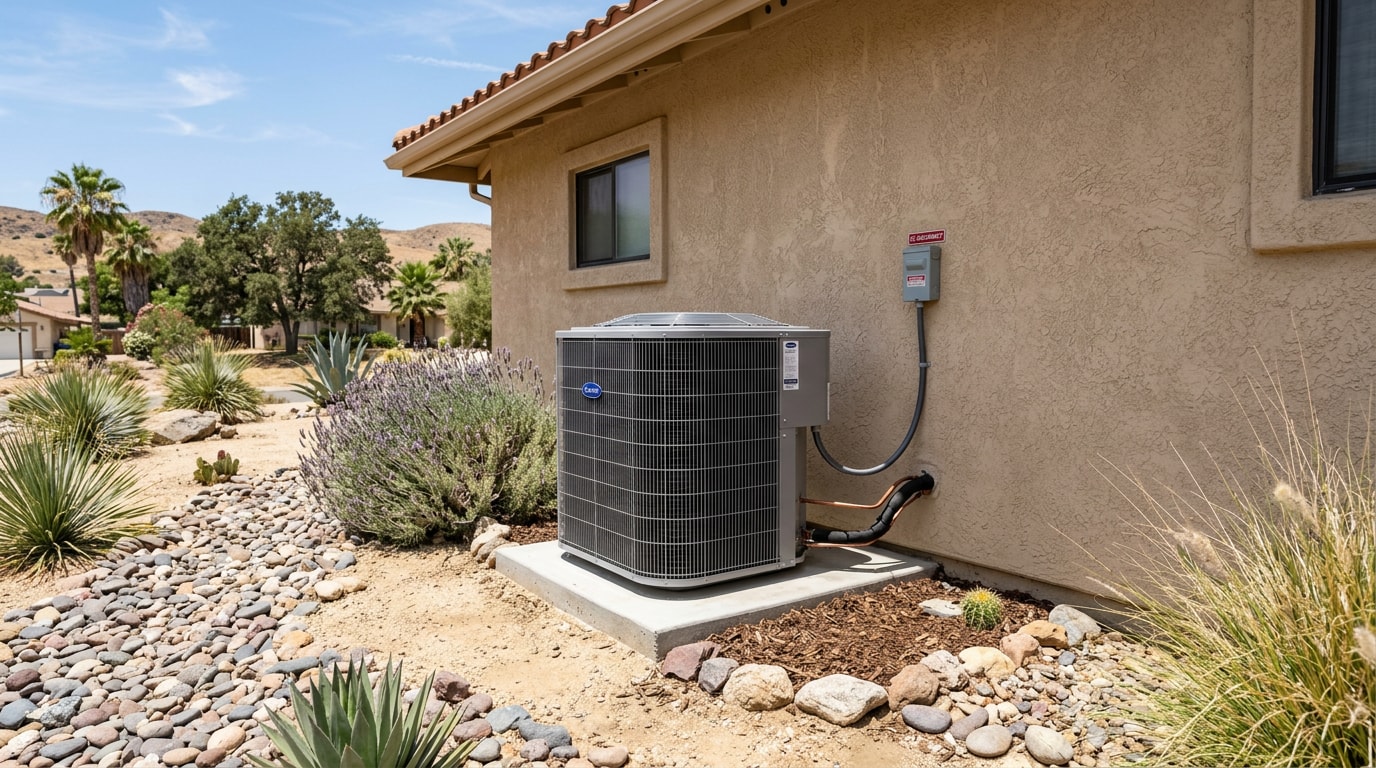
Most Moreno Valley properties run one of five setups:
- Central air conditioning paired with a gas furnace
- Heat pumps
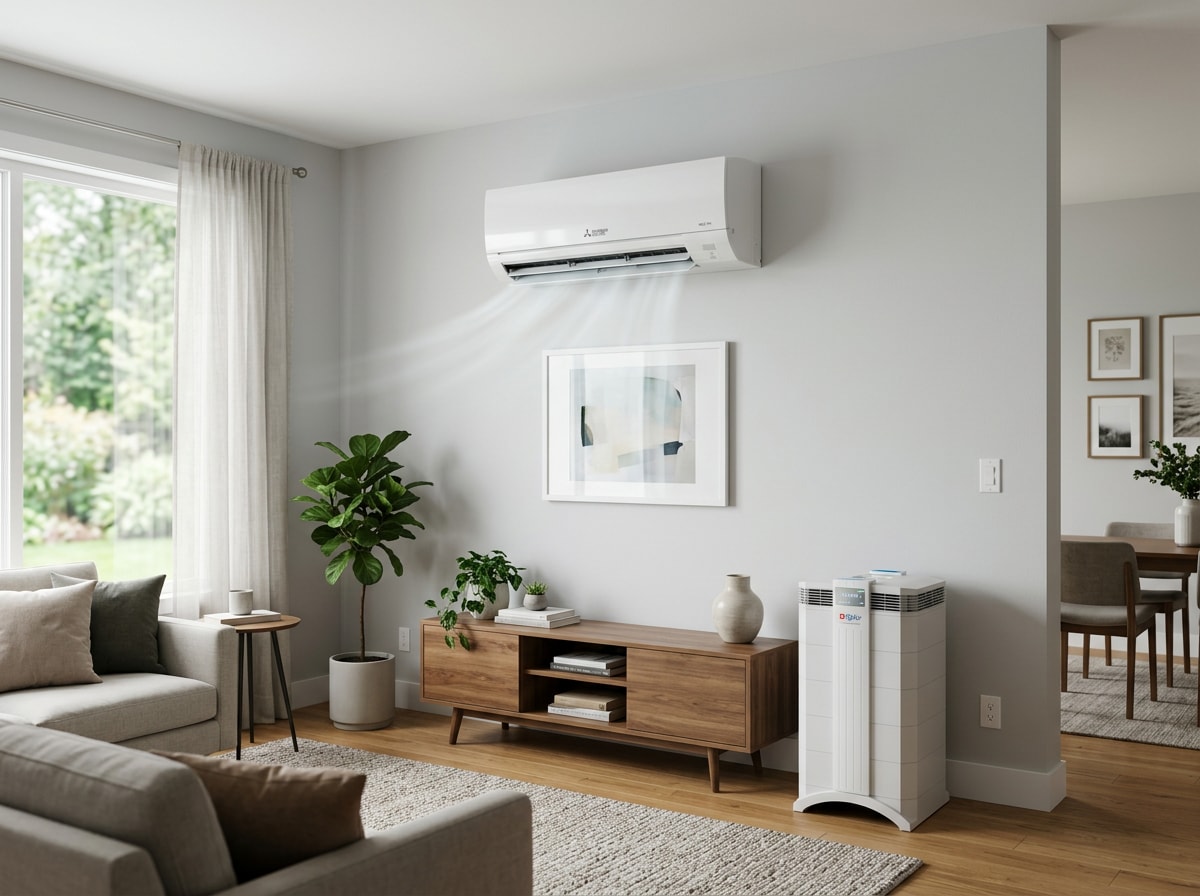
- Ductless mini-splits
- Packaged units
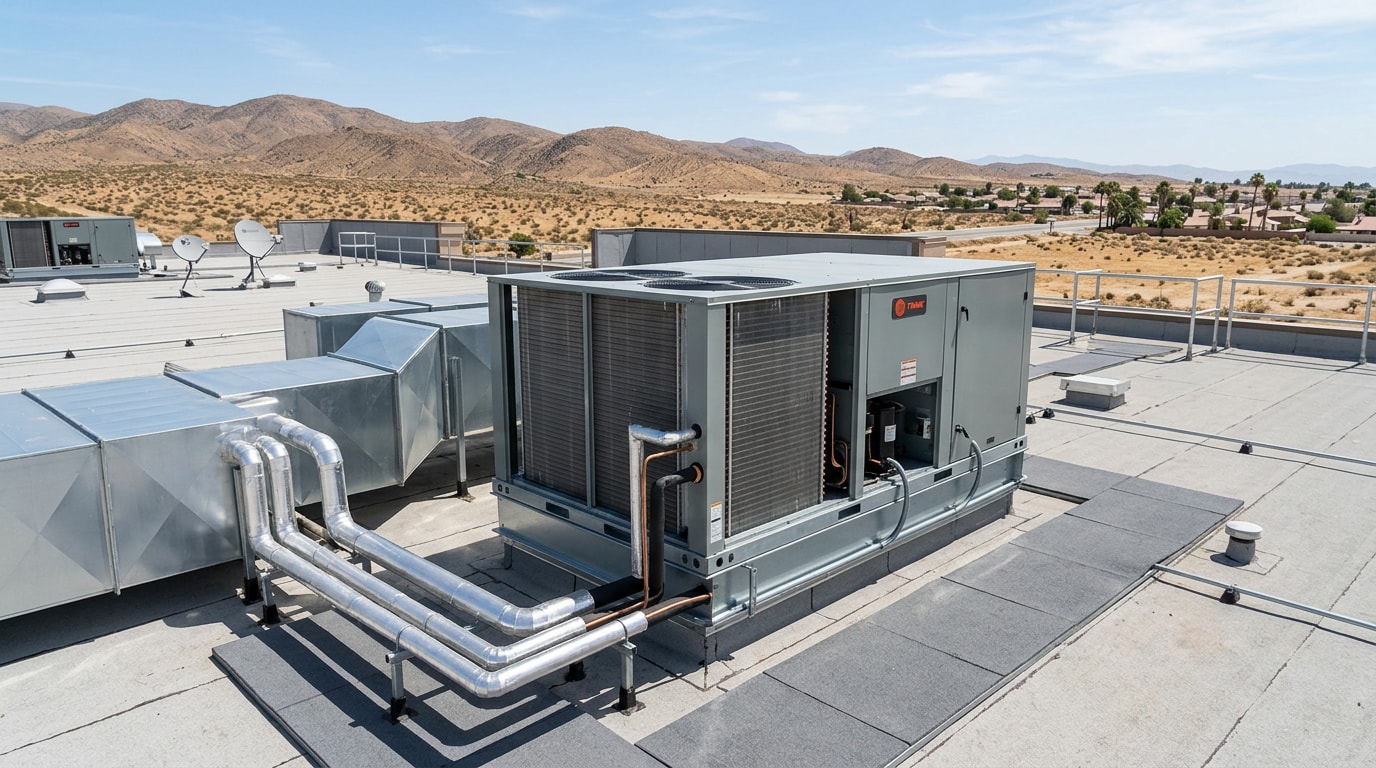
- Rooftop units on light commercial buildings
Home layout, existing ductwork, and budget usually decide which one fits. Commercial properties along the Moreno Valley Mall corridor and similar retail centers tend to lean on packaged rooftop units instead of split systems, which is a different maintenance conversation entirely. If you manage a commercial property, our commercial HVAC guide for Riverside County breaks down what that upkeep actually looks like.
For homes, a technician from our HVAC contractor team can walk through which configuration matches your square footage and duct condition before you commit to anything.
How Moreno Valley's Climate Affects Your HVAC System
Moreno Valley summers run long and hot, with afternoon highs regularly in the triple digits from June through September. That sustained heat pushes air conditioners and heat pumps into longer cooling cycles than milder coastal climates require, adding wear to compressors and capacitors over time.
Inland Empire dust is the other half of the problem. It settles on outdoor coils and clogs filters faster than in cleaner regions, cutting airflow if filters aren't changed often enough. Systems here generally need more frequent attention than units in cooler, cleaner climates, which is why we recommend a tighter maintenance interval for Moreno Valley homes than a one-size-fits-all national schedule would suggest.
Common HVAC Repairs in Moreno Valley
Four issues drive most AC repair calls in this area:
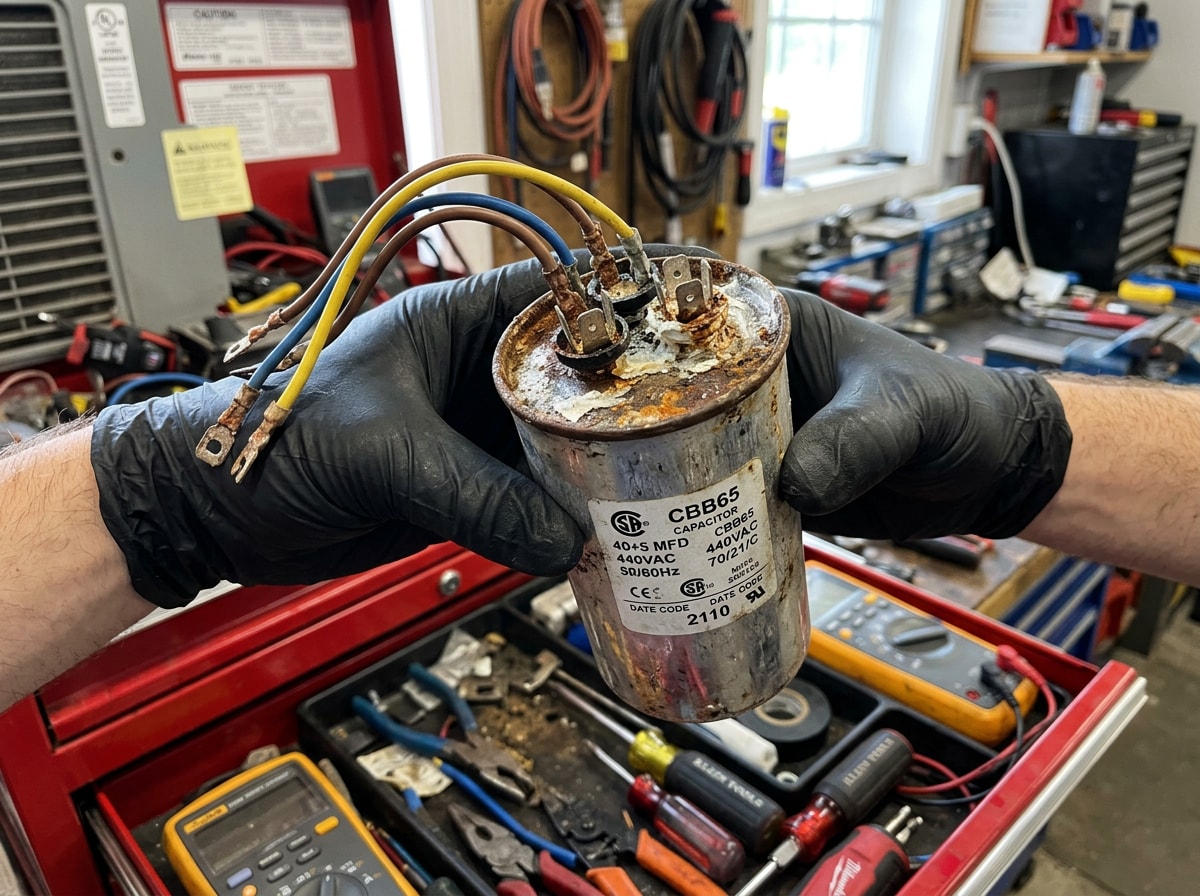
- Capacitor failure — capacitors store the charge that starts compressor and fan motors, and constant high-load cycling in extreme heat shortens their lifespan faster than in milder climates.
- Refrigerant leaks — usually show up as weak cooling or a frozen indoor coil.
- Thermostat problems — can mimic a much bigger mechanical issue until a technician actually tests the system.
- Worn contactors — cause intermittent no-start problems that get worse with every heat cycle.
On the heating side, the same age-and-heat-cycle logic applies to ignitors and heat exchangers, which is why furnace repair calls spike right after the first cold snap each fall.
What to Expect During HVAC Repair
A legitimate repair process follows the same order every time:
- Diagnosis of the actual failure, not a guess
- A cost explanation before any work starts
- Your approval
- The repair itself, completed with quality parts
- A full system test to confirm the fix worked
- Warranty documentation for parts and labor
- Cleanup of the work area
If a technician skips straight from step 1 to step 4 without stopping at step 3, that's worth questioning. Schedule a service visit once you know what the process should look like, and hold whoever shows up to that standard.
Title 24 Codes and Energy Standards in Moreno Valley
HVAC installations and major repairs in Moreno Valley must meet California's Title 24 energy code and Riverside County building requirements, enforced through local permits. Title 24 sets minimum efficiency standards for new equipment, and those standards don't sit still.
The Building Energy Efficiency Standards are updated every three years. The current cycle matters right now because the 2025 Building Energy Efficiency Standards will go into effect January 1, 2026. If you're getting quotes this year, ask specifically which code cycle the contractor is pulling permits under, because a quote written against an outdated standard can complicate inspection sign-off.
The equipment side changed too. Since 2023, the industry shifted from SEER to SEER2 testing, and new minimum energy efficiency standards affecting central air conditioners and heat pumps were established under a new test procedure, with efficiency requirements rising by about 7% even though the SEER number itself only moved by roughly one point. Always confirm the current SEER2 threshold for your equipment size with the California Energy Commission or AHRI's standards summary before signing a quote. Skipping the permit step might save time upfront, but it can complicate a future home sale or an insurance claim after storm or fire damage.
| Region | Split-System AC Under 45,000 Btu/h | Split-System AC 45,000 Btu/h and Above |
|---|---|---|
| North | 13.4 SEER2 | 13.4 SEER2 |
| Southeast | 14.3 SEER2 | 13.8 SEER2 |
| Southwest (includes CA) | 14.3 SEER2 | 13.8 SEER2 |
Confirm exact figures for your equipment class directly with the manufacturer or the CEC appliance database before installation, since thresholds are tied to BTU size and test procedure updates.
Indoor Air Quality Solutions
Dust and allergens that build up in Inland Empire ductwork make indoor air quality a common follow-up concern after almost any repair call. People spend about 90% of their time indoors, and while outdoor air pollution can enter a home, there are also sources of pollution that originate indoors. That's the case for filtration and source control together, not filtration alone.
Whole-home air purifiers, UV germicidal lights installed near the coil, and upgraded HEPA filtration each target a different piece of the problem: particles, mold growth, and airborne allergens.
- Air purifier installation targets airborne particulates and allergens.
- Air quality testing tells you what's actually in the air before you spend money fixing it.
Read the EPA's indoor air quality guidance for the full breakdown of source-control strategies, especially for homes that stay closed up most of the summer.
Emergency HVAC Repair & Installation Services in Moreno Valley
When an AC unit fails during a heat wave, waiting days isn't realistic. Many Moreno Valley HVAC companies advertise 24/7 repair and same-day service, though actual arrival windows vary by company and by season. Contact our emergency service team and ask directly about current response times before you commit to anyone, especially in July and August when every crew in the Inland Empire is booked solid.
FAQ
How often should I service my HVAC system?
Two tune-ups a year: one in spring before cooling season, one in fall before heating season. That schedule catches a weakening capacitor or a cracked heat exchanger before it turns into a full breakdown. Our heating maintenance visits are built around exactly this cadence.
How quickly can you respond to an emergency HVAC issue in Moreno Valley?
Response time varies by company. Many local providers advertise arrival within an hour and same-day repair for less urgent issues, but confirm the actual guarantee rather than the marketing language, especially during peak summer demand when technicians book up fast.
What size AC unit do I need for my Moreno Valley home?
Sizing depends on square footage, insulation quality, window orientation, and existing ductwork, not the size of the unit you're replacing. A proper load calculation performed on-site is the only reliable way to determine correct tonnage. Guessing usually leads to short-cycling or a system that never quite keeps up on a 105-degree afternoon. Our air conditioning installation team runs this calculation before quoting equipment.
When should I replace my HVAC system instead of repairing it?
Replacement generally makes more sense once a system passes 10 years old or a single repair estimate approaches half the cost of a new unit. Below that threshold, repair usually remains the better value for the system's remaining lifespan. See our air conditioning replacement page for what a full swap typically involves.
Should I buy a house with an older HVAC system?
Yes, but budget for it. Get the system inspected before closing, pull maintenance records and the last two years of energy bills if the seller has them, and set aside replacement funds if the unit is past 12-15 years old. A 15-year-old system can still run fine, but it's not a long-term bet.
What HVAC brands do you service in Moreno Valley?
Most licensed contractors, including our team, service all major residential brands: Carrier, Trane, Lennox, American Standard, Rheem, Goodman, and Daikin among others. Brand matters less than whether the specific model was sized and installed correctly for your home.
Why upgrade to an energy-efficient HVAC system?
A high-efficiency system lowers monthly utility bills and performs more consistently through extreme heat. The federal government's own numbers back this up for hot, dry climates specifically: for hot-dry Southwest states, which include California, a required ENERGY STAR-qualified central air conditioner saves money if priced no more than $869 above a less efficient model, and the best available model can save up to $3,154 over its lifetime. On a system running past the 10-year mark, that gap adds up fast. See the Department of Energy's purchasing guide for the full regional breakdown.
Ready to stop guessing and get a straight answer for your own system? Get a free estimate from Priority One, or visit our homepage to see the full range of heating, cooling, and air quality services we run across Moreno Valley, Perris, and the rest of Riverside County.