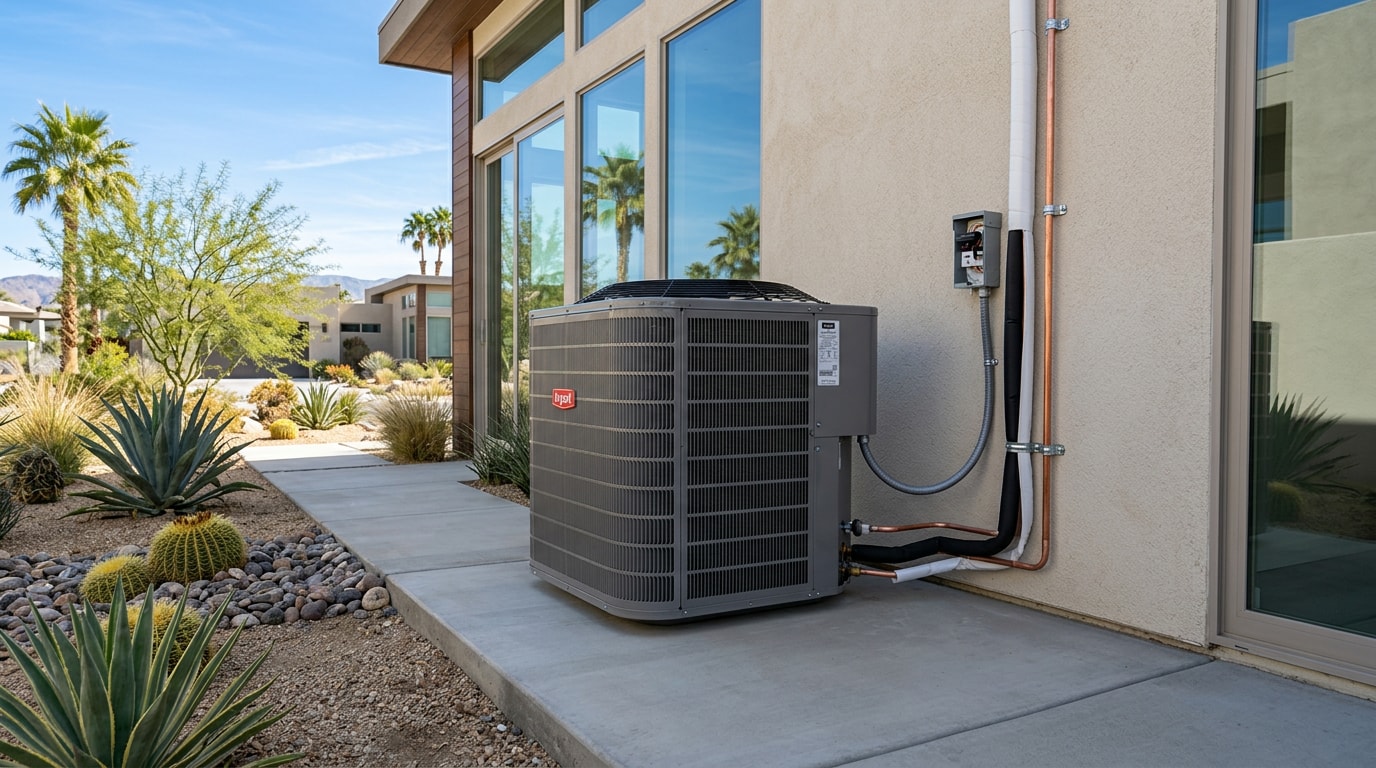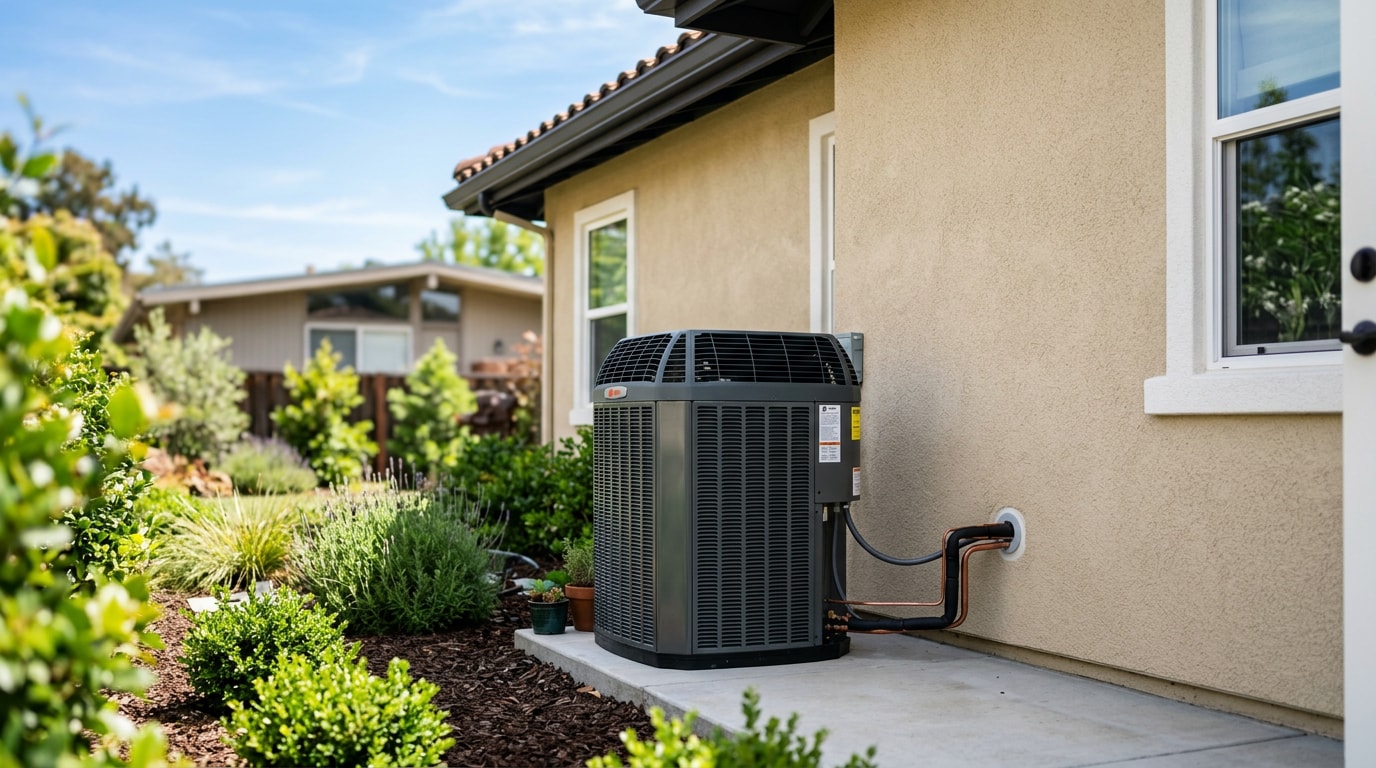
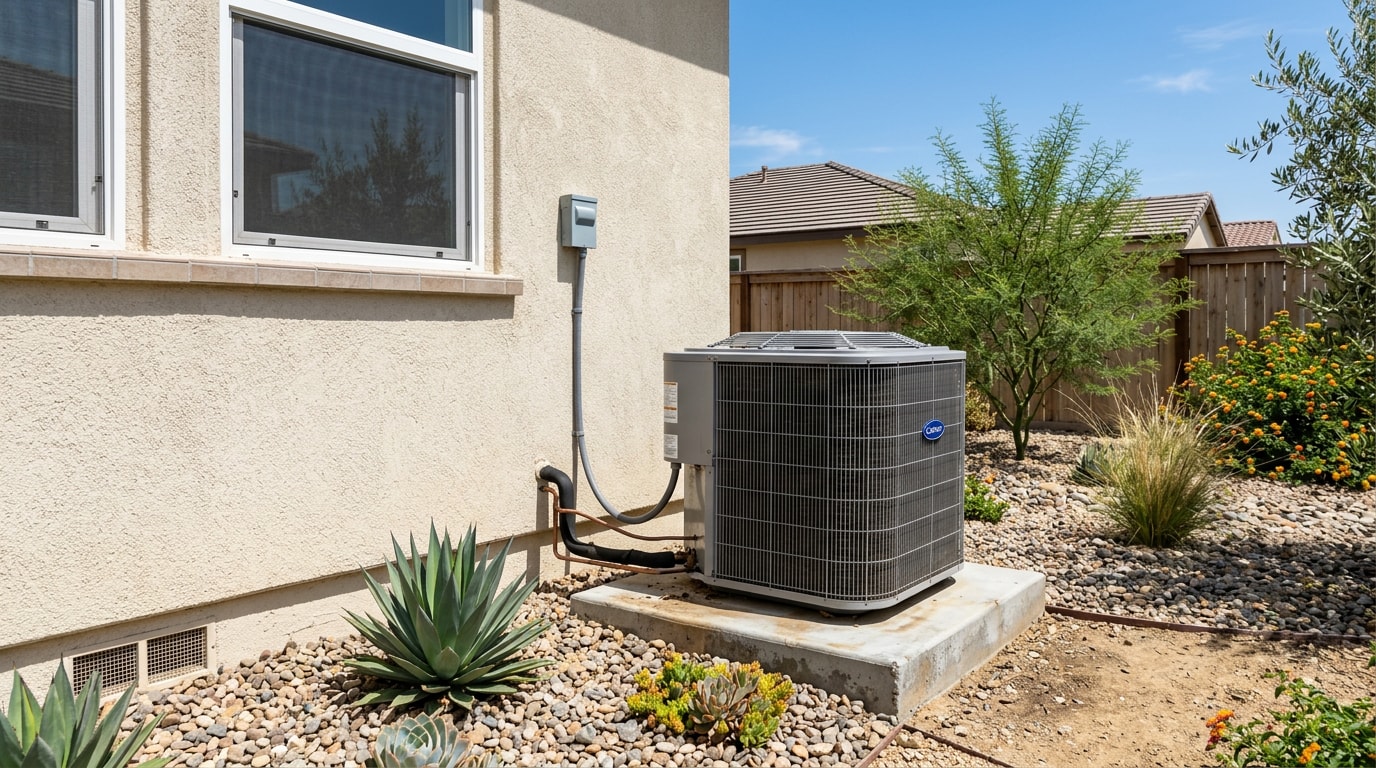
Does air conditioning use gas in Moreno Valley, CA homes? No, central AC runs entirely on electricity. The gas question almost always belongs to the furnace half of your system, not the cooling side. Here's how to tell which parts of your setup actually burn gas and which ones just show up on your electric bill.
Does Air Conditioning Use Gas or Electricity? The Direct Answer
Central air conditioners run on electricity, full stop. There's no gas-powered version sitting in most Moreno Valley backyards. The compressor, the condenser fan, the blower, the thermostat, all of it pulls from your electrical panel.
What trips people up is the word "gas" itself. In HVAC terms, refrigerant is sometimes called "gas" because it changes state between liquid and vapor inside the coils. That's not fuel. It never gets burned, and it has nothing to do with your natural gas line.
Most homes in Moreno Valley run a split system: an electric AC unit paired with a furnace that may burn natural gas or run on electricity for heat. So when someone asks whether their "air conditioning gas or electric" setup includes gas, they're usually really asking about the furnace, not the cooling equipment.
Across the U.S., cooling is a major chunk of the electric bill for a reason. EIA estimates that 18% of annual household electricity use is for air conditioning , and that share climbs higher in hot-summer climates like the Inland Empire. If you want the full breakdown of how that shows up in a utility bill, the EIA's seasonal electricity use report is worth a look.
How an Air Conditioner Actually Works
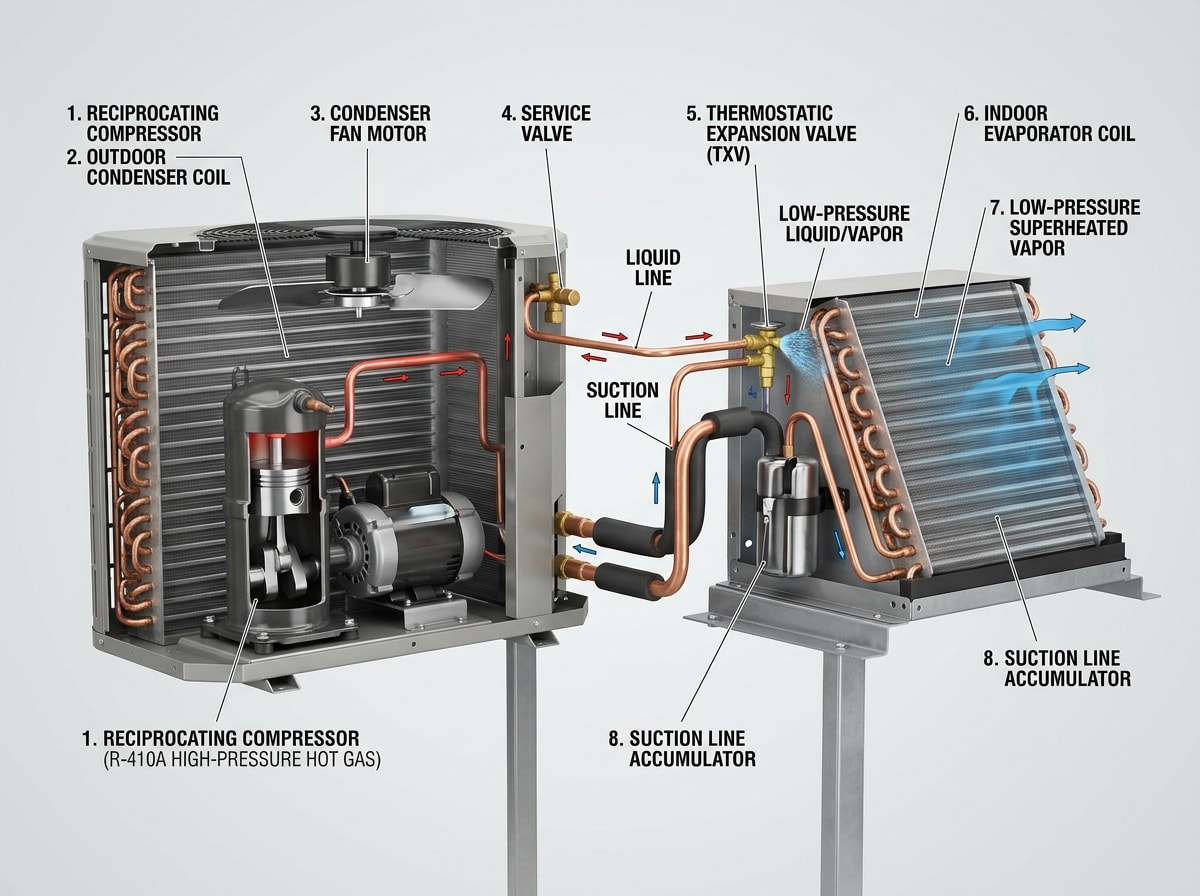
Cooling happens through a refrigerant cycle, not combustion.
- The compressor pressurizes refrigerant and sends it to the condenser unit outside, where heat from your home is released into the outdoor air.
- The refrigerant then flows to the evaporator coil indoors, absorbing heat from air pulled across it by the blower fan.
- That cooled air gets pushed through your ductwork and back into the house.
Electricity powers every single step, including the compressor, which does most of the heavy lifting and most of the electric bill damage.
How to Tell If Your Air Conditioner Is Gas or Electric
You can usually answer this yourself in under five minutes, no tools required.
Check the power source. Look at where the unit connects to power. If it's wired into an electrical outlet or hardwired to your home's electrical panel, with no gas line nearby, it's electric. That's true for virtually every central AC system installed in the last several decades.
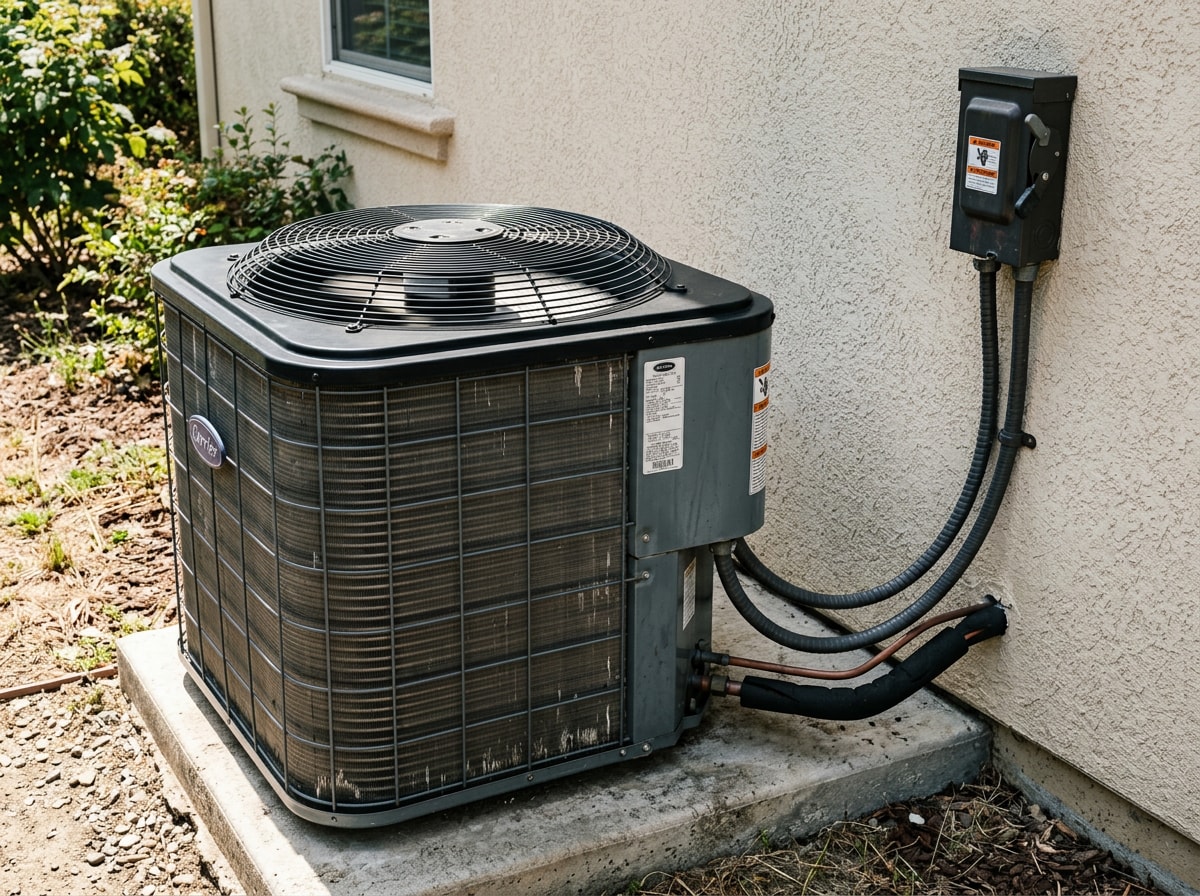
Inspect the outdoor unit. Walk outside and look at the condenser. A large fan with no visible gas lines or connections means standard electric AC. Gas lines, when present anywhere in your HVAC system, feed the furnace, typically located indoors near the air handler, not the outdoor condenser.
Check your furnace separately. If your furnace has a visible gas line, a metal flue pipe venting to the roof, and a pilot light or electronic ignition, it's gas-fired. If it just has electrical wiring and resistance coils, it's an electric furnace.
If any of this is unclear, or you smell gas near your equipment, stop troubleshooting and call a professional. A professional AC and furnace diagnostic visit confirms exactly what's installed and whether anything needs service.
Gas Furnaces vs. Electric Furnaces in a Central Air System
The AC side of your system is always electric, but many Moreno Valley homes pair it with a gas furnace for heating. That combination is where most of the "gas or electric" confusion starts.
Gas Furnace Components
A gas furnace burns natural gas to heat air, which an electric blower fan then pushes through your ductwork. The furnace needs its own gas line, a vent or flue for exhaust, and regular safety inspections, since combustion equipment carries different risks than an all-electric system. If your furnace is aging or showing uneven heat, furnace replacement is usually more cost-effective than repeated repairs on a unit nearing the end of its service life.
Electric Furnace Components
An electric furnace heats air using resistance coils instead of combustion, similar in concept to a large space heater. The whole central air system can run without a gas connection at all. Homeowners choose this route to cut gas usage, simplify maintenance, or because gas service isn't available or desirable for the property. For current certification standards on heating equipment efficiency, ENERGY STAR's furnace program is a useful reference when comparing models.
Hybrid vs. All-Electric HVAC: Which Makes Sense in Moreno Valley?
Replacing an aging system usually comes down to a choice between a hybrid setup (electric AC plus gas furnace) and an all-electric system (AC or heat pump with an electric furnace, or a heat pump alone). Moreno Valley's climate plays a bigger role in that decision than most homeowners realize.
| Factor | Hybrid (Electric AC + Gas Furnace) | All-Electric (AC/Heat Pump + Electric Furnace or Heat Pump) |
|---|---|---|
| Upfront equipment cost | Moderate; furnace and AC priced separately | Often lower with a heat pump doing both jobs |
| Winter performance | Strong in cold climates with deep winter demand | Fully adequate for Moreno Valley's mild winters |
| Gas line required | Yes | No |
| Monthly fuel source | Electric + gas bill | Electric bill only |
| Maintenance complexity | Two fuel systems to service and inspect | One electrical system, generally simpler |
| Best fit | Colder regions with harsh winters | Hot-summer, mild-winter climates like Moreno Valley |
Moreno Valley's summers are the real driver of HVAC cost here, not winter heating demand. August is the hottest month in Moreno Valley with an average high temperature of 97.8°, which ranks it as one of the hottest places in California . Winters, by contrast, are short and mild. That combination is exactly why a growing number of local homeowners skip the gas furnace entirely and go with a heat pump or electric-furnace setup instead of a traditional hybrid system. In our service calls across Moreno Valley, we see far more AC compressor failures and refrigerant issues than furnace breakdowns, simply because the cooling system runs so many more hours per year than the heater does.
If you're weighing both paths, heating installation and air conditioning replacement services can walk you through sizing and cost based on your home's ductwork, insulation, and sun exposure. You can also see examples of completed local installs on our projects page.
Does Mini-Split AC Use Gas or Electricity?
Ductless mini-split systems run entirely on electricity. Unlike central setups that may pair an electric AC unit with a gas furnace, mini-splits have no combustion component and need no gas line at all. That makes them a popular gas-free retrofit for Moreno Valley homes without existing ductwork, additions, garages converted to living space, or older houses where running new ducts isn't practical.
Equipment performance for these systems is independently verified by groups like AHRI, whose certification program ensures that various types of HVACR and water heating products perform according to manufacturers' published claims . Checking the AHRI Directory before you buy is a quick way to confirm a system's rated performance matches what's advertised.
If a gas line isn't an option for your property, or you simply want to avoid one, local ductless mini-split installation is worth exploring. Homeowners throughout Moreno Valley and the wider Riverside County area increasingly choose this route for additions and whole-home retrofits alike.
Get a free estimate if you're not sure whether your current setup is gas, electric, or a hybrid, our techs can confirm it on the spot and walk you through replacement options if it's time for an upgrade.
FAQ
Does my air conditioner use gas or electricity?
Central air conditioners use electricity only. The term "gas" in AC conversations usually refers to refrigerant, not a fuel source, or it's really a question about the furnace paired with your AC.
What does my heat pump use?
Heat pumps run entirely on electricity for both heating and cooling. There's no gas component. The same system simply reverses its refrigerant cycle to switch between modes, making it a fully gas-free heating and cooling option.
Is it possible to use solar power for my air conditioner?
Yes. Since central air already runs on electricity, solar panels can offset or fully cover an AC system's energy use, depending on your system size and household demand.
How can I manage my electricity costs in the summer?
A few habits help: raise your thermostat a few degrees when you're away, keep windows shaded during peak afternoon heat, and schedule annual maintenance so your system runs efficiently. Clean filters also matter; a replaced air filter keeps airflow and efficiency where they should be instead of forcing the compressor to work harder.
Do window air conditioners use a lot of electricity?
Window units generally use less electricity than central AC systems since they cool smaller spaces. Checking the unit's wattage label gives you a reasonable estimate of what it adds to your monthly energy costs.
Why does my AC smell like gas if it doesn't burn fuel?
That smell is almost never coming from the AC itself. It's usually the nearby furnace, a gas appliance, or a refrigerant leak that can produce an odor some people describe as gas-like. Either way, treat it as urgent and have it inspected rather than guessing.
Is a gas furnace cheaper to run than an electric furnace in Moreno Valley?
It depends on local utility rates and how many hours of heating you actually need. Because Moreno Valley winters are short and mild, the heating side of the bill matters far less here than in colder states, which is one reason electric-only systems have closed the cost gap for many local households.
For a broader look at heating and cooling costs across the region, see our guide on heating and HVAC service in Moreno Valley. You can also start on our homepage to see the full range of services we offer across Riverside County.