HVAC installation in Riverside County, CA typically runs $5,000 to $16,000+ depending on system type, and the number on your quote depends on factors most estimates never spell out. A 1960s ranch in Riverside proper has different ductwork and electrical needs than a newer two-story build in Temecula or Menifee. This guide breaks down real 2026 cost ranges, permit rules, SEER2 requirements, and what changed with federal tax credits, so you walk into estimates already knowing what's fair.
Visit Priority One, Inc. to see our services and request a free estimate.
How Much Does HVAC Installation Cost in Riverside County in 2026?
Installed pricing depends on three things: the equipment's SEER2 rating, the condition of your existing ductwork, and whether your electrical panel needs an upgrade to run the new system.
A straightforward like-for-like AC swap on an accessible unit costs far less than a full heat pump conversion that needs new line sets, a bigger electrical circuit, or duct sealing.
| System Type | Typical Installed Cost (2026) |
|---|---|
| AC-only swap (like-for-like) | $5,000 - $7,500 |
| Furnace + AC combo system | $7,500 - $12,000 |
| Ducted heat pump system | $9,000 - $16,000+ |
| Ductless mini-split (per zone) | $4,000 - $8,000 |
These ranges assume a residential single-family home. Multi-zone commercial jobs, severely undersized ductwork, or full duct replacement push costs higher.
Getting a load calculation and an in-person inspection before you accept a quote is the only reliable way to know which end of that range applies to your home. Browse our air conditioning installation and heating installation service pages for a closer look at system options, or request a free estimate for pricing specific to your address.
Do You Need a Permit for HVAC Installation in Riverside County?
Yes, in nearly every case. A mechanical permit is required for new HVAC installations, full system replacements, ductwork modifications, and electrical changes tied to the new equipment.
Permit requirements are set at the city level, so Riverside, Corona, Moreno Valley, Temecula, and Murrieta each process applications slightly differently. Unincorporated areas fall under the Riverside County Building and Safety Department.
Permits typically trigger these inspection steps:
- Permit application – your contractor submits equipment specs and installation plans
- Plan review – staff checks the application against Title 24 and local mechanical code
- HERS testing – a certified rater verifies duct sealing and airflow on most alterations in this climate zone
- Final inspection – a building inspector signs off before the job closes out
Skipping a required permit creates problems later, especially when selling a home or filing an insurance claim. If you're buying a resale home and want to confirm prior work was permitted, our guide on what an HVAC inspection covers and costs walks through what inspectors actually check.
Furnace, AC, or Central System: Which Installation Do You Need?
Most homeowners searching for HVAC installation are really asking about one of three scenarios.
- Furnace installation usually applies to new construction or homes adding heating for the first time, since many Riverside County houses lean heavily on cooling.
- Air conditioning installation covers new homes, additions, or remodels where cooling is being added or upgraded on its own.
- Central AC installation refers to a whole-home system cooling every room through a shared duct network, as opposed to window units or mini-splits serving individual spaces.
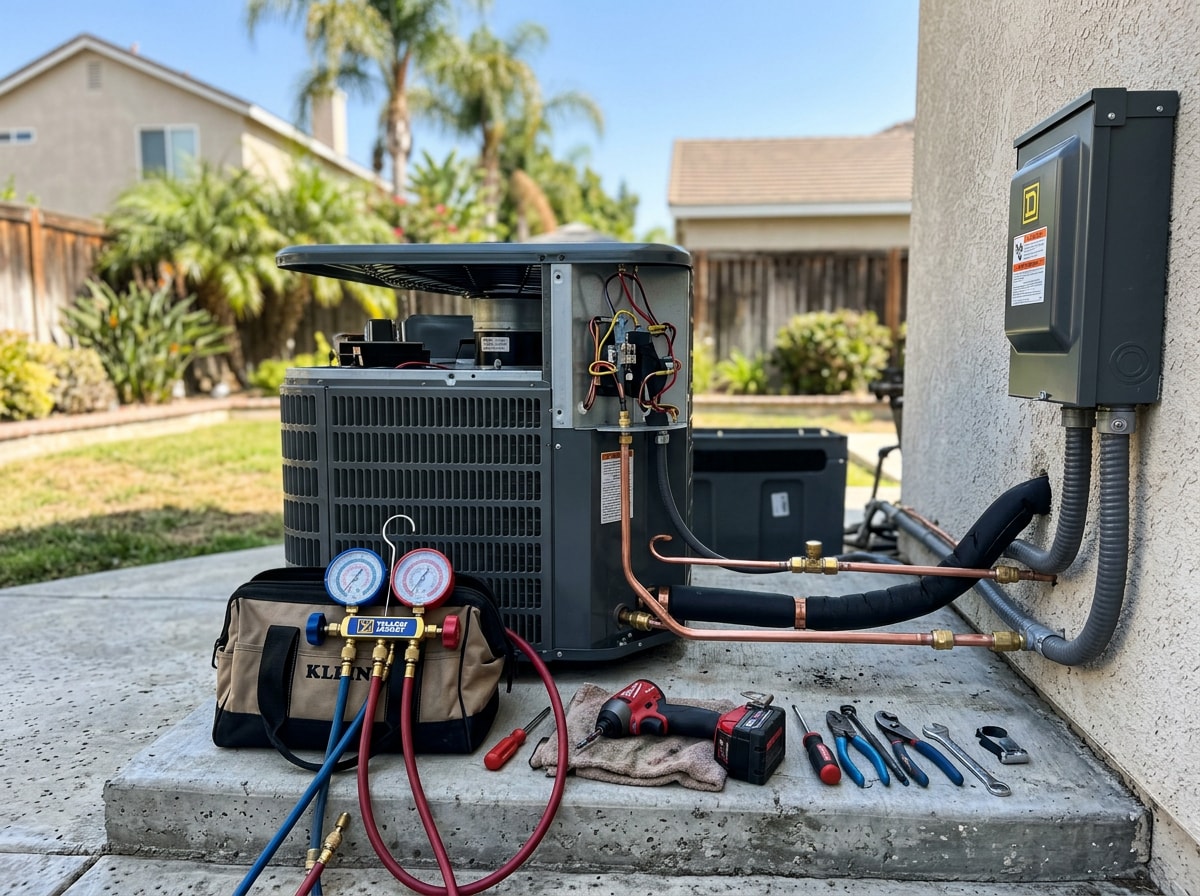
Each scenario calls for different sizing, ductwork evaluation, and equipment selection. Be specific about which one applies to your project when requesting quotes.
See our HVAC Contractor services page for the full breakdown of installation options we handle across the county.
HVAC Replacement vs. New Installation: What's Different
HVAC replacement differs from new installation in one key way: you're swapping an entire existing system rather than adding one where none existed.
A full system replacement makes more sense than a component-only swap when:
- The indoor and outdoor units are mismatched in age
- Existing ductwork can't support higher-efficiency equipment
- Repair costs on an aging unit keep climbing
Replacing the whole system at once (indoor coil, outdoor condenser, and sometimes ductwork) avoids compatibility issues that can shorten the lifespan of mixed-age components. Our air conditioning replacement page walks through what a full system swap typically involves.
Picking the Right SEER2 Rating for Riverside County's Climate
Riverside County's cooling season runs longer and hotter than in most of California, so an undersized or inefficient AC unit works harder, and costs more, for a much bigger chunk of the year.
To carry the ENERGY STAR label, a split-system central air conditioner must meet a minimum SEER2 rating of 15.2, verified against the certified product list EPA maintains for ENERGY STAR-certified central air conditioners. Equipment below that threshold may still meet federal minimums, but it runs longer each day during peak summer months, which adds up on utility bills over several years.
Many homeowners replacing an older unit here find it worthwhile to step up in efficiency rather than matching the old rating, especially on homes that run cooling six-plus months a year.
Is a Heat Pump Worth It in Riverside County?
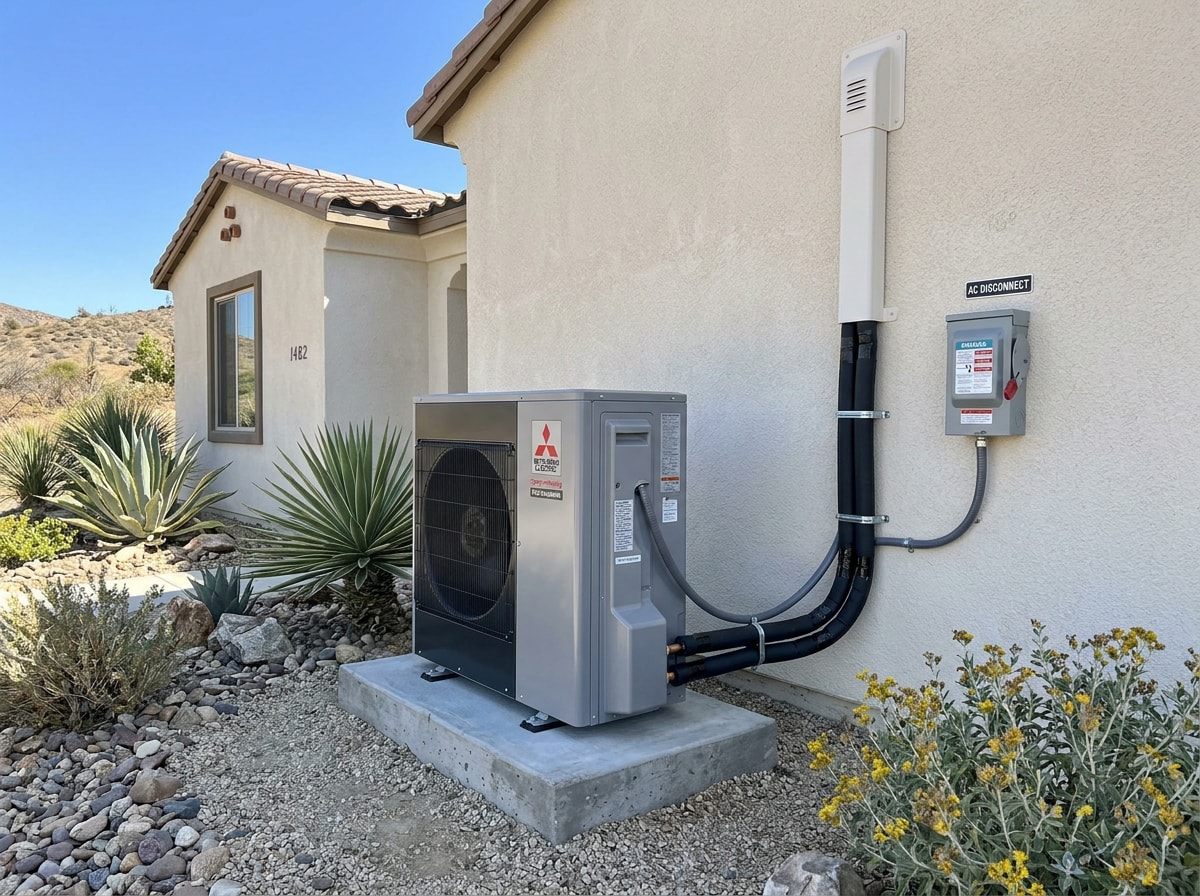
A heat pump handles both heating and cooling from a single outdoor unit, which simplifies equipment and maintenance compared to running a separate furnace and AC.
Riverside County's mild winters make heat pumps a practical fit, since the unit rarely has to work against extreme cold the way it would in colder regions.
Proper sizing still matters. A heat pump that's too large or too small for the home's actual heating and cooling load will cycle inefficiently regardless of its efficiency rating. A qualified contractor should run a load calculation based on the ACCA Manual J methodology the Department of Energy recommends rather than sizing by square footage alone, since duct condition, insulation, and window exposure all factor in.
Repair or Replace? Signs Your System Is Done
Most manufacturers and industry groups put the median service life of a residential split-system air conditioner at 12 to 15 years. A single repair costing more than roughly half the price of a new unit is usually the signal to stop repairing.
Age alone isn't the only factor, though. A well-maintained 12-year-old system might still be a reasonable repair candidate. Watch for these replacement signals too:
- Rising utility bills despite normal usage patterns
- Uneven cooling between rooms
- A unit that struggles to keep up during peak summer heat
- Repair calls more than once or twice in a single season
On our installs across Corona, Menifee, and Temecula, undersized return ducts cause more comfort complaints than equipment brand or SEER rating ever does, which is why we check duct sizing before quoting a straight equipment swap. If your system is approaching that age threshold and showing these signs, our heating repair and air conditioning repair pages can help you weigh the next step before committing to a full replacement.
How to Choose a Reliable HVAC Contractor in Riverside County
Vet any contractor on a few specifics before signing a contract:
- Active C-20 state contractor license and proof of liability insurance
- NATE certification for the technicians doing the actual install work
- Written warranty terms on both equipment and labor
- Local experience with Riverside, Corona, Temecula, and surrounding jurisdictions
NATE certification means a technician has passed standardized testing on installation and service practices, which matters more than years in business alone. Local experience counts too; a contractor working across the county for years will know jurisdiction-specific permit quirks that an out-of-area company might miss. Our guide on what to check before you call an AC guy near you covers red flags worth ruling out before you sign anything.
If you're comparing bids for Riverside County, CA HVAC work, see examples of completed jobs on our projects page before you decide.
2026 Update: The Federal HVAC Tax Credit Has Ended
Here's something most 2026 guides still get wrong: the federal Energy Efficient Home Improvement Credit (Section 25C), which used to pay back 30% of qualifying HVAC costs, no longer applies. Under the One Big Beautiful Bill Act, the IRS confirms the credit is "not allowed for any property placed in service after Dec. 31, 2025."
That means a 2026 heat pump or furnace install no longer carries that federal credit toward the cost. State and utility rebate programs through providers like Southern California Edison and SoCalGas can still apply, but amounts and eligibility change throughout the year, so confirm current offers before you budget.
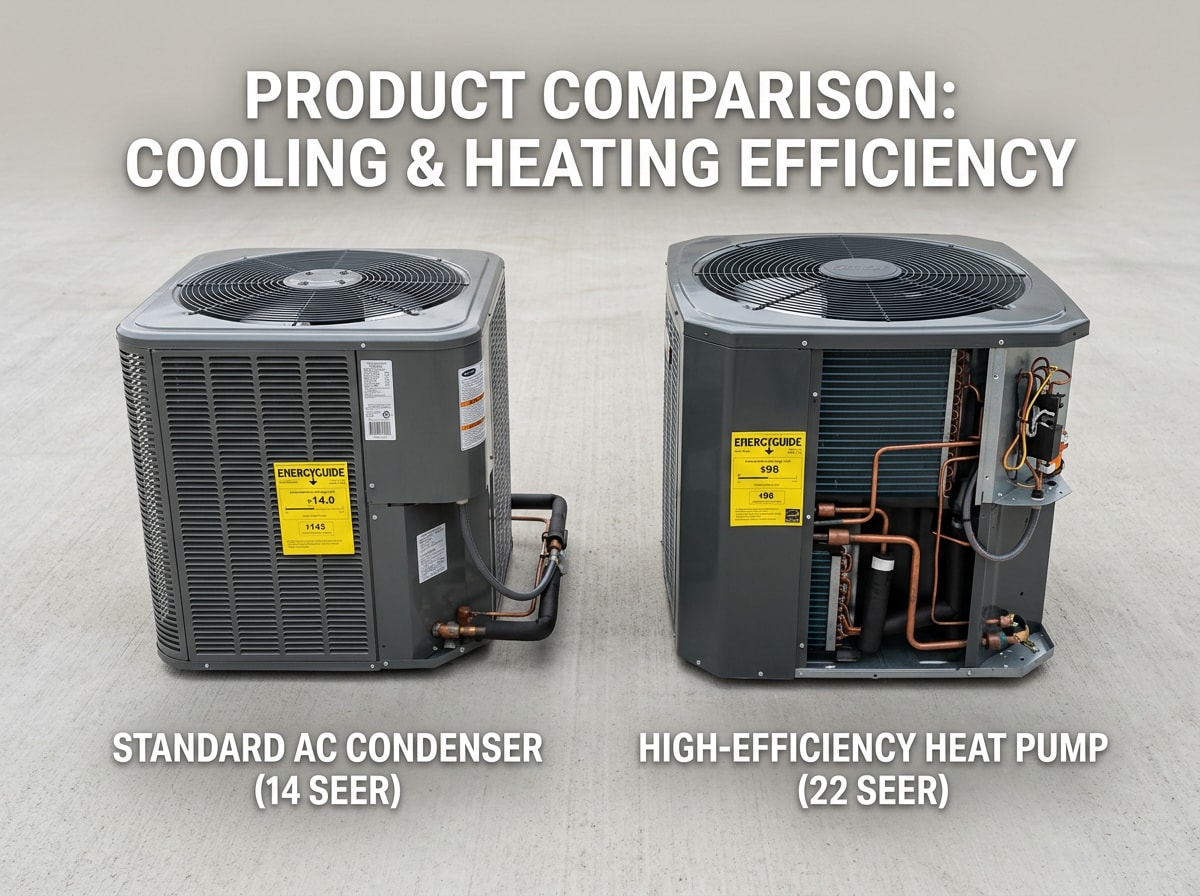
Payback math still favors higher-efficiency equipment over time, even without the federal credit, since a standard-efficiency system costs less upfront but saves less on monthly bills. A higher-efficiency heat pump costs more to install but can close that cost gap through lower combined heating and cooling use.
Air quality upgrades installed alongside your new system, like a ventilation installation or air filter replacement schedule, add comfort value even though they don't carry a federal credit either. For current pricing on your specific home, get a free estimate from our team.
FAQ
How much does an HVAC permit cost in Riverside County?
Mechanical permit fees typically range from roughly $100 to $400 depending on scope and jurisdiction. Electrical or ducting modifications bundled into the same project add to that base fee.
How long does it take to get an HVAC permit approved?
Straightforward change-out permits are often approved within a few business days to about two weeks. Projects involving electrical upgrades or structural changes can take longer if additional plan review is required.
How long does HVAC installation itself take?
A like-for-like AC or furnace swap usually takes one day. A full system replacement with ductwork changes or a heat pump conversion can take one to three days, plus a separate HERS testing and inspection visit.
What size HVAC system do I need for my home?
The correct way to size a system is a Manual J load calculation, which accounts for square footage, insulation, window exposure, ceiling height, and local climate rather than a square-footage rule of thumb. Square-footage-only estimates frequently lead to oversized or undersized systems that run inefficiently.
Are there any rebates left for HVAC installation in Riverside County in 2026?
The federal 25C tax credit ended for equipment placed in service after December 31, 2025. Some state and utility rebate programs are still active, but amounts and eligibility change throughout the year, so confirm current offers with your utility or contractor before finalizing equipment.
Is a heat pump or a separate furnace and AC better for Riverside County?
Both work well here because winters are mild. A heat pump simplifies equipment into one outdoor unit and one maintenance schedule, while a separate furnace and AC can make sense if you already have a newer furnace and only need to replace the AC side.