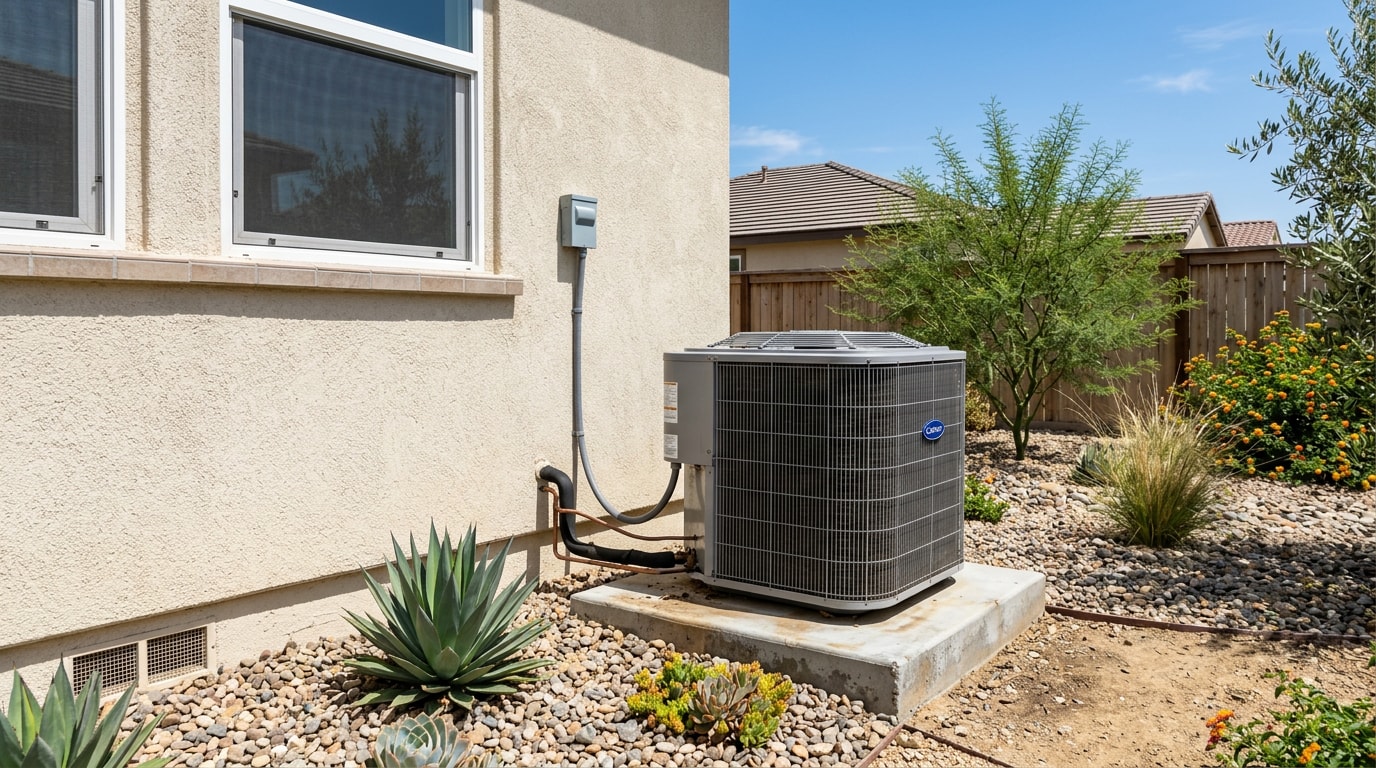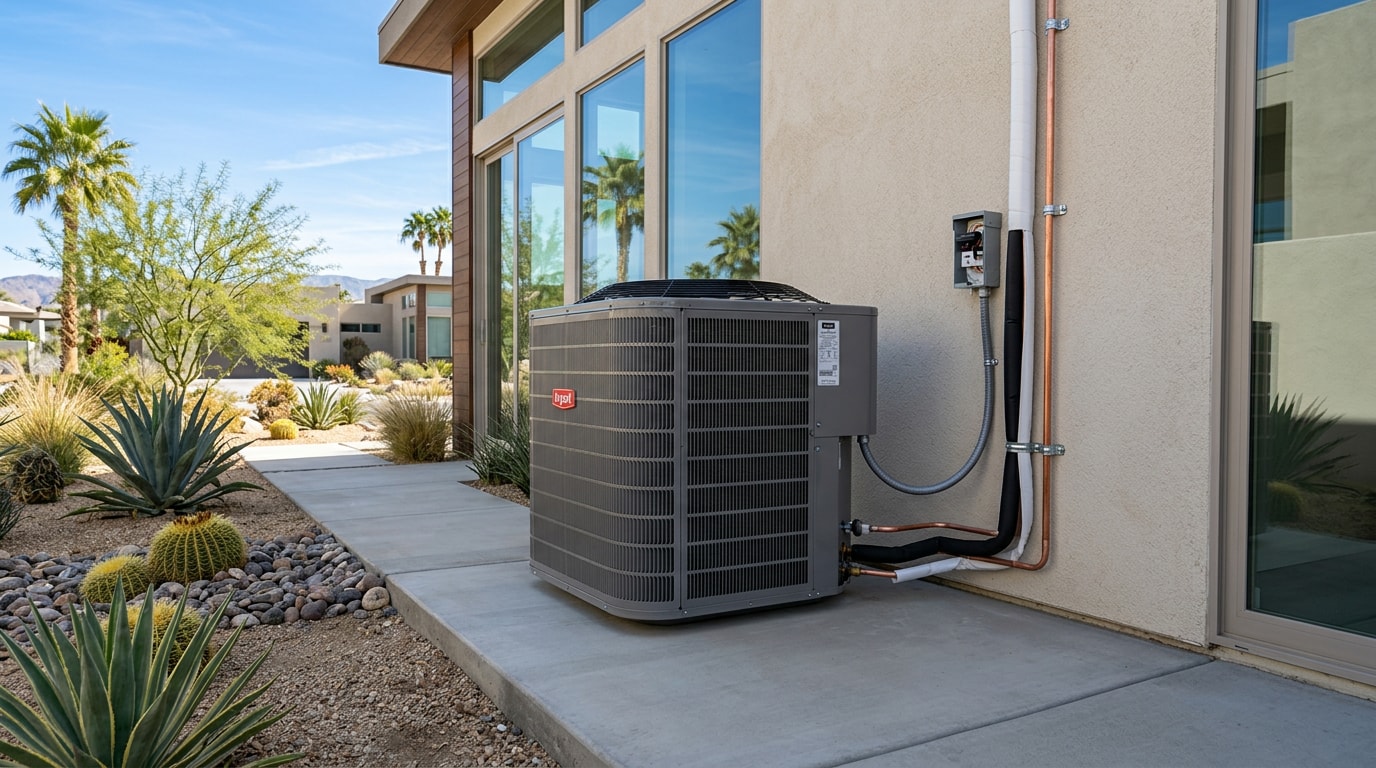
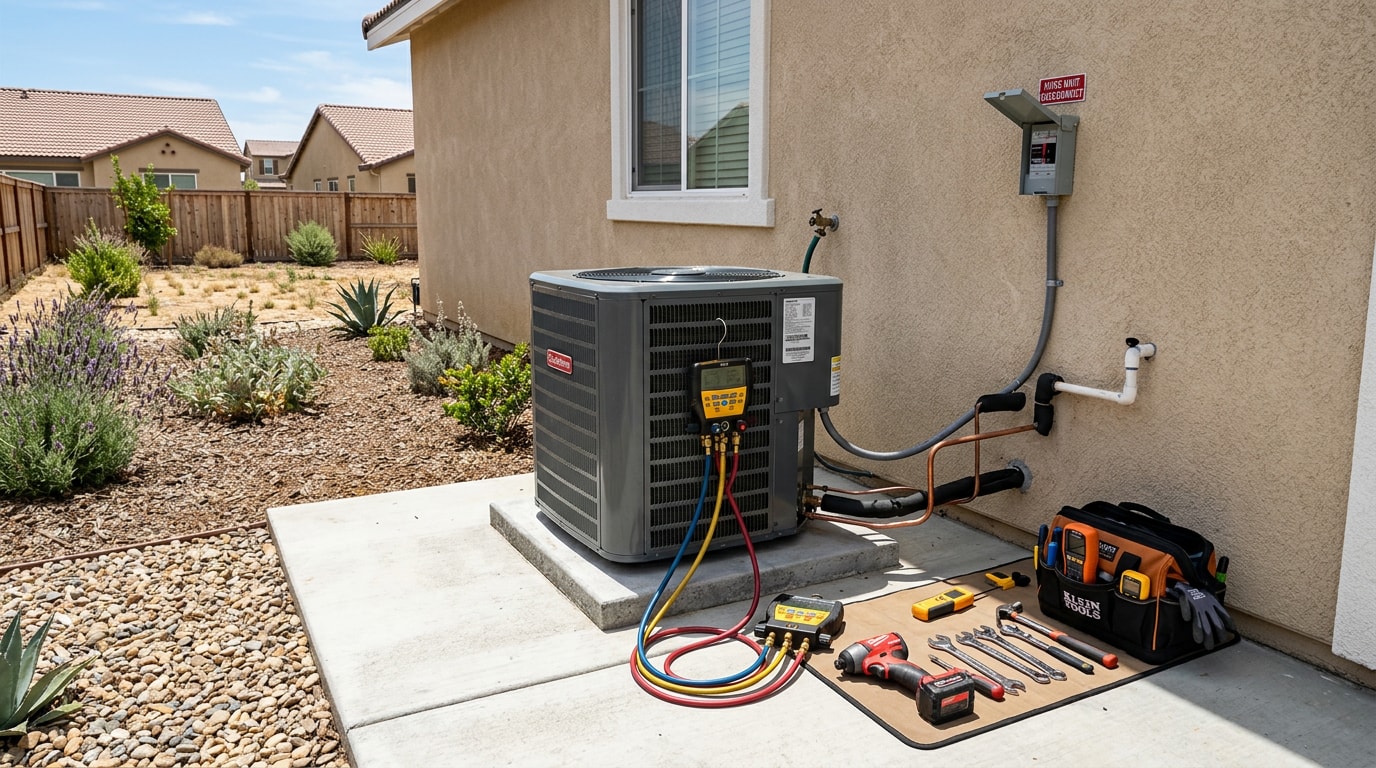
An HVAC maintenance agreement in Temecula, CA locks in two professional tune-ups a year instead of leaving your system's condition to chance. Temecula's dry heat and valley dust load coils and filters faster than milder coastal climates, so a skipped season here tends to cost more than it would somewhere else. Here's what a real agreement should include, what drives the price, and how residential plans differ from commercial ones.
Why Temecula's Climate Changes the Maintenance Math
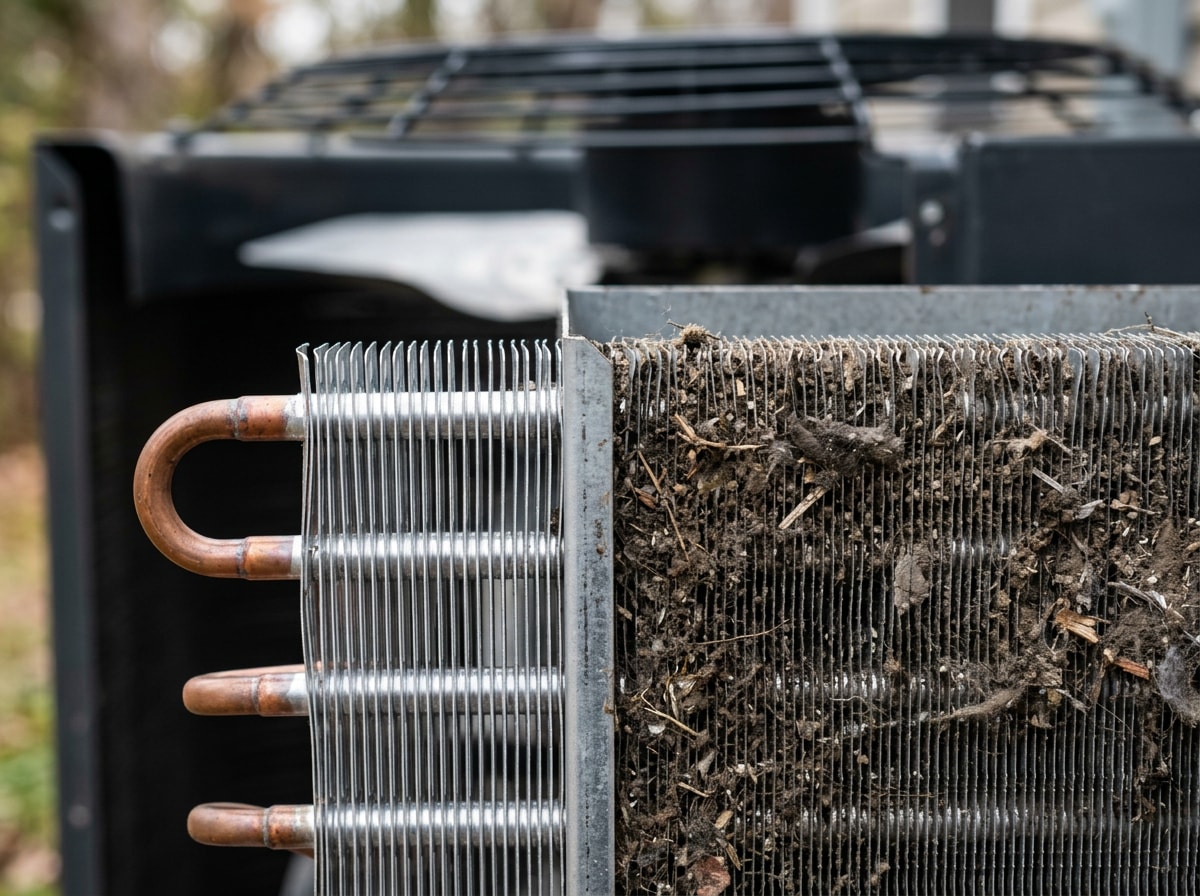
Low humidity means airborne dust and pollen don't settle the way they do in coastal or humid regions. Instead, they circulate and cake onto condenser coils, forcing the system to work harder for the same cooling output.
That buildup happens faster during Temecula's long, hot stretch from June through September, which is exactly when a dirty coil causes the most strain. HVAC systems also play a direct role in ventilation and indoor air quality, a connection the EPA documents in detail for building operators managing dust, humidity, and pollutant control. EPA studies show that some indoor air pollutants can be two to five times, and occasionally 100 times, higher than they are outdoors , which is part of why a system that isn't maintained doesn't just run less efficiently, it also circulates dirtier air.
Wildfire smoke events, not uncommon in inland Southern California, add another wrinkle. During a smoke event, filters should be checked within 48 hours regardless of the normal replacement schedule, since smoke particulate clogs media far faster than everyday dust.
What's Included in a Residential HVAC Maintenance Agreement
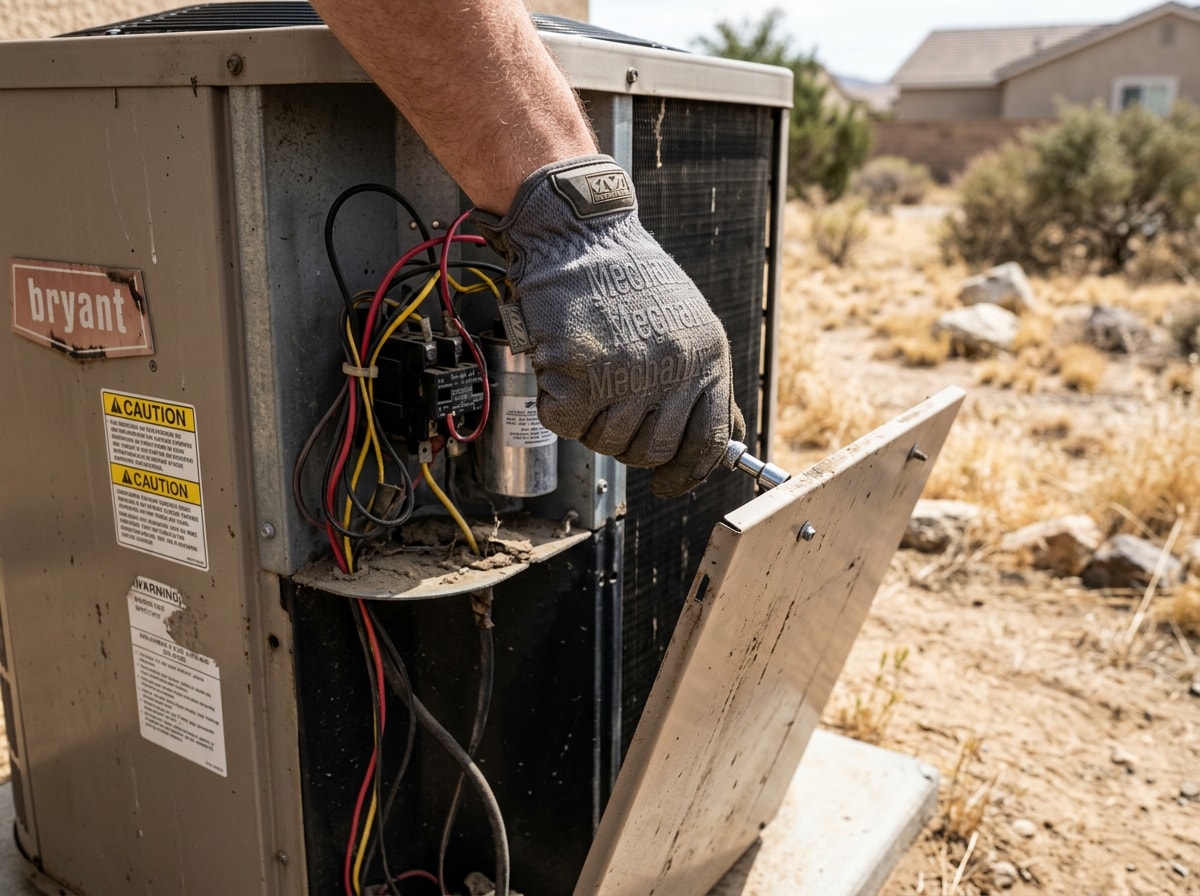
A residential agreement typically locks in two visits a year: one in spring for the air conditioning system, one in fall for the furnace. Each visit should cover both the cooling and heating sides of the system, not just whichever one is in season, since a thorough technician checks electrical connections and safety controls regardless of the time of year.
A properly run visit generally includes:
- Full system inspection for wear, leaks, or developing component failures
- Filter check, cleaning, or replacement to protect airflow and indoor air quality
- Condenser and evaporator coil cleaning, since dirty coils reduce both efficiency and cooling capacity
- Refrigerant level check and adjustment, since incorrect charge is one of the most common causes of poor cooling performance
- Thermostat calibration and lubrication of moving parts to reduce friction and wear
- Ductwork inspection for leaks or blockages that affect airflow and energy efficiency
ENERGY STAR backs this up directly: a dirty air filter will cause your heating and cooling system to work harder to distribute air, which can increase energy costs and damage your equipment, leading to early failure . That's also why having a qualified contractor conduct tune-ups in the spring and in the fall can have a big effect on utility bills and allows small issues to get caught before they become expensive problems .
For households with equipment that needs more frequent attention, like older units or homes running longer cooling seasons, a provider can usually build a customized schedule around the household's specific equipment and usage rather than forcing everyone into the same two-visit template. Our heating maintenance service page outlines what a fall furnace visit typically covers in more detail.
Commercial HVAC Maintenance Agreements for Temecula Valley Businesses
Commercial equipment runs harder and longer than residential systems, which is why a twice-a-year schedule usually isn't enough once a property has two or more units in operation. For businesses, a maintenance agreement commonly shifts to a quarterly visit schedule, with priority dispatch built in for emergency calls during business hours.
What separates a commercial agreement from a residential one in practice:
- Quarterly preventive visits instead of twice a year
- Priority scheduling ahead of non-contract customers during peak summer demand
- Documented service records for property management or compliance files
- Repair pricing that's usually discounted compared to one-off service calls
Restaurants, medical offices, and other facilities with health-code or temperature-sensitive exposure carry more risk from a failed system, which is part of why those business types often request more frequent filter service on top of the standard quarterly visit. Our HVAC contractor services page covers installation, repair, and maintenance scope for both small offices and larger commercial accounts.
Residential vs. Commercial Agreements at a Glance
| Feature | Residential Agreement | Commercial Agreement |
|---|---|---|
| Visit frequency | Twice a year (spring and fall) | Quarterly |
| Scope per visit | Full AC and heating inspection | Scheduled tune-ups plus filter service |
| Priority dispatch | Standard scheduling | Priority during business hours |
| Repair pricing | Varies by provider | Typically discounted vs. one-off calls |
| Documentation | Usually informal | Service records for compliance files |
What a Maintenance Agreement Should Actually Specify
Most homeowners never read their maintenance agreement past the price line, which is a mistake. A vague agreement that just says "annual inspection" gives a technician room to do the bare minimum and still technically satisfy the contract.
Before signing, confirm the agreement specifies:
- The exact number of visits per year and which season each one falls in
- A list of measured tasks (refrigerant charge, static pressure, electrical draw) rather than just a visual walkthrough
- Priority scheduling terms for emergency calls, including expected response windows
- Whether repair discounts apply and how large they are
- Whether the agreement transfers to a new owner if the property sells
A visit that only includes a visual check and a filter swap isn't the same service as one that includes actual measurements of coil condition, electrical performance, and refrigerant charge. Ask the provider directly which one you're buying.
How Much Does an HVAC Maintenance Agreement Cost in Temecula?
Pricing varies more than most homeowners expect, and the number of units on a property is usually the biggest factor. A single-system home costs less to maintain than a property running separate systems for different zones, and commercial accounts with rooftop units price differently than residential split systems.
Other factors that move the price:
- Equipment age and type (heat pumps and multi-zone systems take longer to service than a standard split system)
- Visit frequency (twice-yearly residential vs. quarterly commercial)
- Whether the plan is paid annually in one lump sum or split into monthly installments
- Whether repair discounts and priority dispatch are bundled into the base price or sold as add-ons
Because these variables shift the total so much, the most accurate way to get a number is to request a quote based on your specific equipment and property rather than relying on a generic published rate. You can request a free estimate and get pricing specific to your system instead of guessing from averages that may not reflect your setup.
Filter Care Between Visits
A maintenance agreement covers the twice-a-year professional work, but filter care in between visits is on the homeowner or facility manager. The right MERV rating depends on the environment: offices and retail spaces typically do fine with a standard filter replaced every one to three months, while medical offices and high-dust industrial spaces need higher-MERV filters changed monthly or more often.
DOE's Zero Energy Ready Home program and the EPA's Indoor AirPlus program require filters be at least MERV 8, and MERV-13 or higher is recommended for control of viruses , which is a useful baseline for anyone deciding whether to upgrade. Our air filter replacement service page has guidance on choosing a filter that fits your system's airflow capacity without choking the blower.
How We Approach Maintenance Agreements in Temecula
Priority One Heating & Air services residential and commercial HVAC systems throughout the Temecula Valley, and the pattern we see on service calls backs up the climate math above: systems on a consistent maintenance schedule show up on our board for repairs far less often during peak summer than systems that skipped a season. A dirty coil we catch in a spring visit is a fifteen-minute cleaning; the same coil ignored until August tends to show up as a mid-afternoon no-cool call with a truck roll and an overtime rate attached.
If you're comparing agreement options in the broader area, our guide to HVAC membership plans in nearby Corona breaks down how pricing and perks typically stack up, which is useful context even if you're based in Temecula proper. For general seasonal service needs beyond a formal agreement, see our heating and cooling guide for Temecula.
Homeowners and property managers across Temecula, Murrieta, and the rest of Riverside County can reach our team directly to compare plan options. Visit {{SITE_URL}}/ for our full service lineup, or go straight to {{SITE_URL}}/contact to request a free estimate on a residential or commercial agreement.
FAQ
What should I look for in an HVAC maintenance agreement?
Check that it specifies the number of visits per year, exactly what's measured at each visit (not just a visual inspection), priority scheduling terms for emergencies, any repair discounts, and whether the agreement transfers if you sell the property.
How often should residential HVAC systems be serviced?
At minimum, once a year. Most providers recommend two visits: one in spring for the air conditioning system and one in fall for the furnace, so both sides of the system get checked before their respective seasons.
How often should commercial HVAC systems be serviced?
Quarterly is the common standard for commercial equipment under a maintenance agreement, with some high-use facilities like restaurants requesting monthly filter service on top of the quarterly professional visit.
Does a maintenance agreement affect my equipment's warranty?
It can. Many manufacturer warranties require documented annual professional maintenance to stay valid, so a maintenance agreement that provides service records can double as warranty protection.
What does a typical maintenance visit cost without an agreement?
A single tune-up visit is usually priced per unit, and costs more over time than bundling the same visits into an annual agreement, since standalone visits don't include the repair discounts or priority scheduling an agreement typically bundles in.
Do you provide commercial HVAC services in Temecula?
Yes. Commercial HVAC installation, repair, and maintenance agreements are available for Temecula Valley businesses running single or multi-unit systems.